Weight vs. Volume Measurements in Cooking
If a recipe calls for "8 ounces" of an ingredient, do you grab a liquid measuring cup or pull out your digital kitchen scale? This exact question is where a lot of kitchen disasters start. The confusion between weight and volume is easily one of the most common reasons conversions go sideways.
If you want consistent results, you have to understand what these units are actually measuring. Let's clear up the weight vs. volume debate once and for all.
Weight vs. Volume at a Glance
- ›Weight (Mass): Measures how heavy an ingredient is. Units include grams (g) and ounces (oz). Measured using a scale.
- ›Volume (Space): Measures how much physical space an ingredient occupies. Units include milliliters (mL), cups, and tablespoons (tbsp). Measured using cups or spoons.
- ›Density Factor: Only liquid water has a 1:1 ratio where 1 gram equals 1 milliliter (or 1 fluid ounce equals 1 dry ounce). Other ingredients vary.
Convert Kitchen Units Instantly
Skip the ounce confusion. Use our free Unit Converter to swap between metric, imperial, volume, and weight units in a second.
The Fluid Ounce vs. Dry Ounce Trap
This is where a lot of cooks get tripped up. In the US, the word "ounces" does double duty:
- Ounces (weight): A measurement of mass (1 ounce = 28.35 grams).
- Fluid Ounces (volume): A measurement of liquid volume (1 fluid ounce = 29.57 milliliters).
Here is the catch: because water has a density of exactly 1g/mL, 8 fluid ounces of water happens to weigh exactly 8 ounces. But water is the only ingredient that does this. For everything else in your pantry, 8 fluid ounces will weigh something completely different depending on its density:
| Ingredient | Volume (Fluid Ounces) | Actual Weight (Ounces) | Weight (Grams) |
|---|---|---|---|
| Water | 8 fl oz (1 cup) | 8.3 oz | 236g |
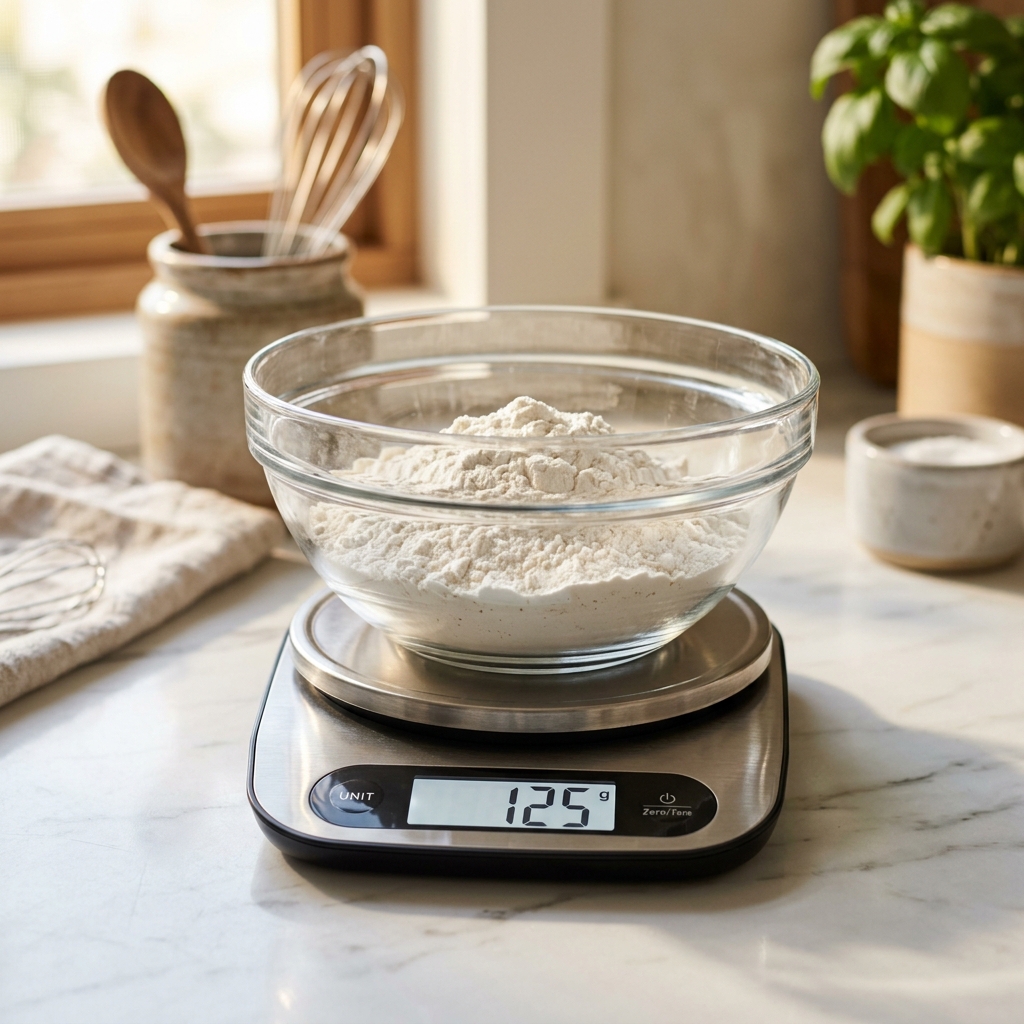
| All-Purpose Flour | 8 fl oz (1 cup) | 4.4 oz | 125g |
| Granulated Sugar | 8 fl oz (1 cup) | 7.1 oz | 200g |
| Honey | 8 fl oz (1 cup) | 12.0 oz | 340g |
| Vegetable Oil | 8 fl oz (1 cup) | 7.7 oz | 218g |
Never assume fluid ounces and weight ounces are the same. A cup of honey weighs almost three times as much as a cup of flour!
When to Weigh and When to Scoop
You don't need to be obsessed with weighing every single thing you eat. Here is a realistic guide on when to pull out the scale and when cups are perfectly fine:
When to weigh (use a scale):
- All dry baking ingredients (flour, sugar, cocoa, starch, oats)
- Solid fats (butter, shortening, cream cheese)
- Sticky ingredients (honey, peanut butter, molasses) that stick to cups
- Scaling any recipe up or down
When to scoop (use cups or spoons):
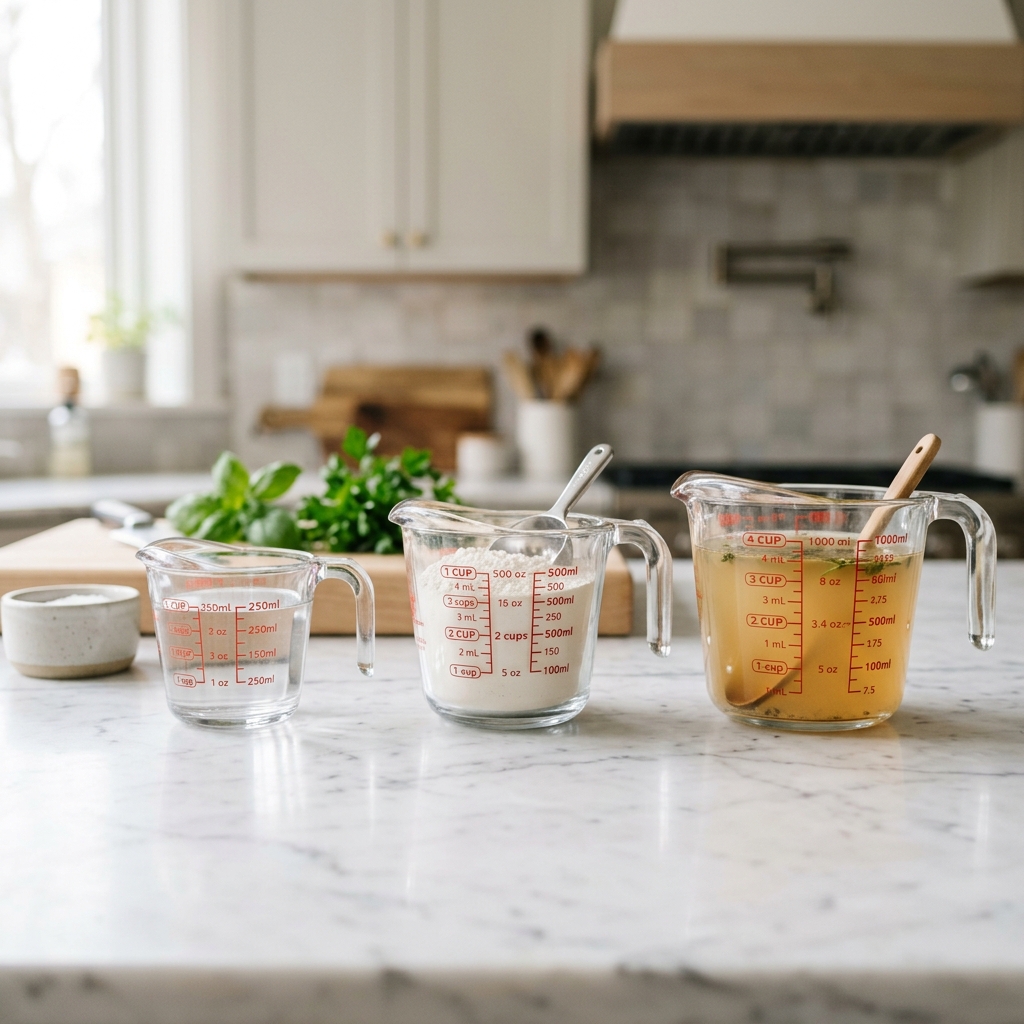
- Pure liquids (water, milk, vinegars, broths)
- Small quantities of spices, leaveners, or extracts under 1 tablespoon
- Sautéing, cooking soups, stews, or roasting vegetables where ratios are forgiving
The Metric Advantage
Try Our Converter
Need to swap units? Use our free Unit Converter to switch between fluid ounces, dry ounces, grams, milliliters, and cups instantly, keeping your proportions right.
More Measuring Tools
Keep your kitchen measurements on point with these free tools:
- Unit Converter — Convert between metric and imperial weight/volume units.
- Ounces Converter — Swap ounces, grams, and fluid ounces.
- Cups to Grams Converter — Convert cups of baking ingredients to grams.
- mL and Cups Converter — Swap liquid volumes across different regions.
The Bottom Line
Learning the difference between weight and volume is a game changer in the kitchen. Once you start weighing your flour and baking ingredients on a scale while scooping liquids by volume, your baking will become completely consistent.
Frequently Asked Questions
Recommended Reading
Why Professional Bakers Weigh Ingredients Instead of Using Measuring Cups
Why do professional bakers refuse to use measuring cups? Because a cup of flour can weigh anywhere from 120g to 165g. Here is why grams will change your baking forever.
Cups vs. Grams: Why Baking by Weight Actually Works
Ever wonder why your chocolate chip cookies turn out different every time you bake them? Let's talk about why swapping your measuring cups for a digital scale is the easiest upgrade you can make.
Why One Cup of Flour Doesn't Always Weigh the Same
Why does a cup of flour weigh different amounts every time you measure it? Learn how settling, humidity, and technique mess with your recipes.