Why Professional Bakers Weigh Ingredients Instead of Using Measuring Cups
Walk into any professional bakery—whether it's a tiny local pastry shop or a massive bread kitchen—and you will see digital scales everywhere. What you won't see is a single plastic measuring cup.
This isn't kitchen snobbery. It's pure practicality. Every serious baker eventually learns a hard truth: measuring cups are wildcards, and wildcard measurements lead to unpredictable baking.
Why Weighing Beats Scooping
- ›Volume is inconsistent: Flour settles and packs; a single cup of flour can weigh between 120g and 165g.
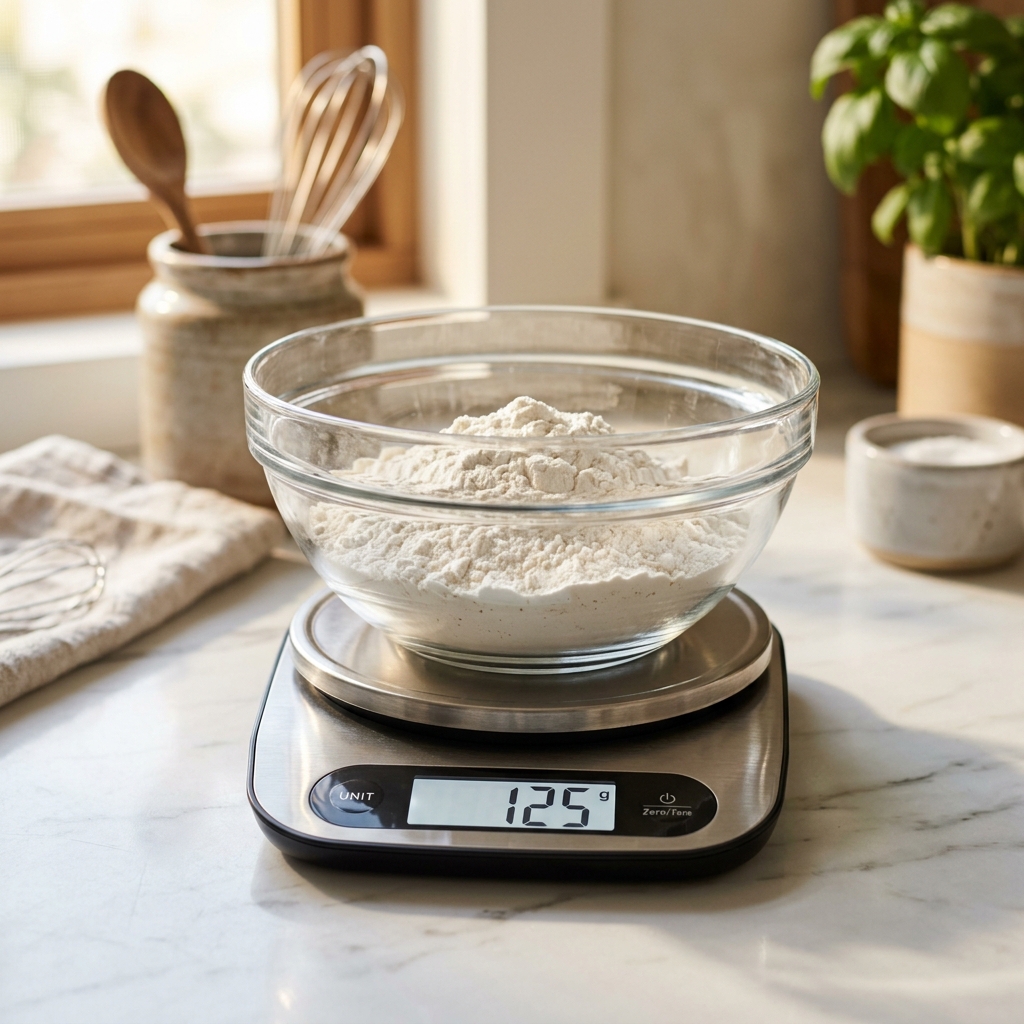
- ›Weight is absolute: Grams measure mass. 125g of flour is always 125g, fluffed or compacted.
- ›Saves time & cleanup: Pour multiple ingredients directly into one mixing bowl using the scale's tare button.
- ›Better replication: Professional recipes use weights to guarantee baking consistency.
Ensure Perfect Baking Ratios
Stop guessing the compression. Use our free Cups to Grams Converter to swap cup recipes for exact gram weights in a second.
The Real Problem with Cups
A measuring cup tells you *volume*—how much physical space something takes up. But what a baking recipe actually cares about is *mass* (how much stuff is actually there). Those two things are not the same, and the difference is where baking disasters hide.
Take flour. A single cup of all-purpose flour can weigh anywhere from **120 grams to 165 grams** depending on:
- If you scooped it straight from the bag (which packs it down, making it heavy)
- If you spooned it gently into the cup (which keeps it light and airy)
- If it sat in the jar and settled over time
- How hard you pressed the cup into the container
That's a huge 45-gram swing. That is 37% more flour using the exact same cup! Since flour is the backbone of your bake, too much of it means your cakes will be dry and dense. Too little, and they won't hold their shape.
One cup of flour can weigh anywhere from 120g to 165g depending on your technique. That's a 37% difference using the exact same cup.
The Scoop Test
This isn't just theory. In one test, a group of home cooks were asked to measure out "1 cup of flour" using their usual method. The results were all over the map—same instruction, completely different weights.
Here is how the numbers stack up depending on how you scoop:
- Spooned and leveled (usually what recipe authors want): ~120–125g
- Scooped straight from the bag: ~140–165g
- Packed down from the bottom of the bag: 165g or more
It's Not Just Flour Either
While flour is the biggest culprit, other dry ingredients suffer from the same volume issues:
- Brown sugar: Recipes often say "packed," but how hard is packed? Packed brown sugar is roughly 213g per cup, while a loose cup is only 170g. That's a 25% difference.
- Powdered sugar: Sifted vs. unsifted is night and day. Sifted is around 113g per cup, but unsifted can pack in up to 130g. That can ruin a glaze or frosting by making it too thick to spread.
- Cocoa powder: Because it's super fine, it packs down easily. Scooping it can easily give you way more chocolate flavor (and dryness) than you planned for.
- Oats: Rolled oats are large and irregular, trapping heaps of empty space. The weight of a cup depends entirely on how much they've settled in the box.
| Ingredient | Sifted / Spooned / Loose | Scooped / Packed / Compacted | Weight Variance |
|---|---|---|---|
| All-Purpose Flour | 120g - 125g | 140g - 165g | Up to 37% |
| Brown Sugar | 170g | 213g | 25% |
| Powdered Sugar | 113g | 130g | 15% |
| Cocoa Powder | 85g | 120g | 41% |
Why Grams Win Every Time
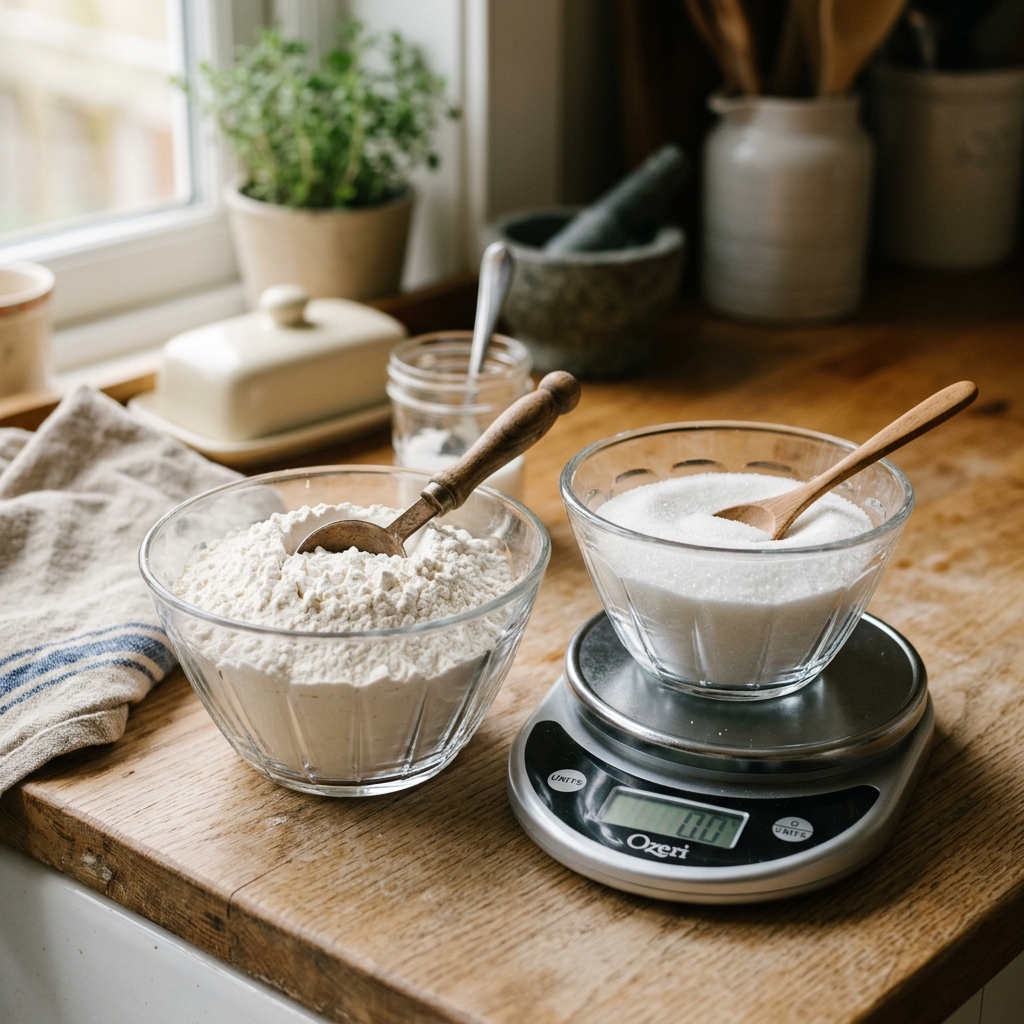
Weight is a fixed property of the food itself. A gram of flour is always a gram of flour—no matter if you sifted it, scooped it, or packed it down with a spoon. There's no special technique to learn. It doesn't matter if your flour settled in the cupboard for a month or was just fluffed up.
Why this matters in the real world:
- For home bakers: You can get away with volume errors sometimes, but it's why your cookies are chewy one week and cakey the next. Using grams makes your favorite bakes turn out exactly the same way every time.
- For professional bakers: If you're baking 200 loaves of bread, small volume errors multiply. Being off by just 5 grams per cup across hundreds of loaves means pounds of wasted or incorrect ingredients. Precision isn't about being fancy; it's about consistency.
How to Start Weighing (And Save Dishes)
You don't need fancy equipment. A cheap digital kitchen scale costs about $15 and is accurate to 1 gram. That's all it takes.
Here is the real secret: weighing ingredients actually saves you time and clean-up. Here's the workflow:
- Put your mixing bowl on the scale and press "Tare" (this zeroes it out).
- Pour in your first ingredient (like flour) until you hit the target weight. Press Tare again.
- Pour your next ingredient (like sugar) directly into the same bowl. Press Tare again.
- Keep going until everything is in.
You end up using just one bowl, zero measuring cups, and you have zero sticky spoons to wash. It's incredibly fast once you get the hang of it.
If your favorite recipes only use cups, just run them through our cups to grams converter once. Jot down the gram weights in the margin of your recipe book, and you're set forever.
Convert Your Recipes
Ready to upgrade your baking? Use our free Cups to Grams Converter to swap your favorite cup recipes to grams, ensuring your results turn out exactly the same every single time.
More Baking Tools
Keep your kitchen measurements accurate with these free tools:
- Cups to Grams Converter — Convert cups of baking ingredients to grams.
- Grams to Cups Converter — Convert weights back to volume cups.
- Unit Converter — Convert between metric and imperial units.
- Recipe Scaler — Scale recipe servings up or down.
The Bottom Line
At the end of the day, baking is about precision. For breads, cakes, pastries, and cookies where texture is everything, ditching the cups and using a kitchen scale is the single best thing you can do for your cooking.
Frequently Asked Questions
Recommended Reading
Cups vs. Grams: Why Baking by Weight Actually Works
Ever wonder why your chocolate chip cookies turn out different every time you bake them? Let's talk about why swapping your measuring cups for a digital scale is the easiest upgrade you can make.
Why One Cup of Flour Doesn't Always Weigh the Same
Why does a cup of flour weigh different amounts every time you measure it? Learn how settling, humidity, and technique mess with your recipes.
Why You Should Ditch Your Measuring Cups for a Scale
Baking is all about chemistry, which means weight is king. Here is why measuring cups make your recipes inconsistent, and how a digital scale makes baking faster and cleaner.