Why One Cup of Flour Doesn't Always Weigh the Same
If you scoop a cup of flour today, scoop another cup tomorrow, and weigh them both on a kitchen scale, they will almost certainly show different numbers.
This isn't a problem with your scale or your cups. It's just how flour behaves. Flour is incredibly sensitive to the environment and how you handle it. Let's look at the physical reasons why a cup of flour is a moving target.
Why Flour Weights Shift
- ›Compression: Flour settling in the bag or container packs closely together, squeezing out air and increasing weight per cup.
- ›Humidity (Hygroscopy): Flour absorbs moisture from the air. High humidity increases weight without changing volume.
- ›Technique: Scooping directly from the bag packs flour. Spooning and leveling keeps it aerated.
- ›Flour Type: Protein levels affect density. Bread flour is denser (130g/cup) than cake flour (115g/cup).
Eliminate Flour Volume Variables
Keep your cakes from turning into bricks. Use our free Cups to Grams Converter to find the exact gram weight you need for any flour.
1. Gravity and Settling
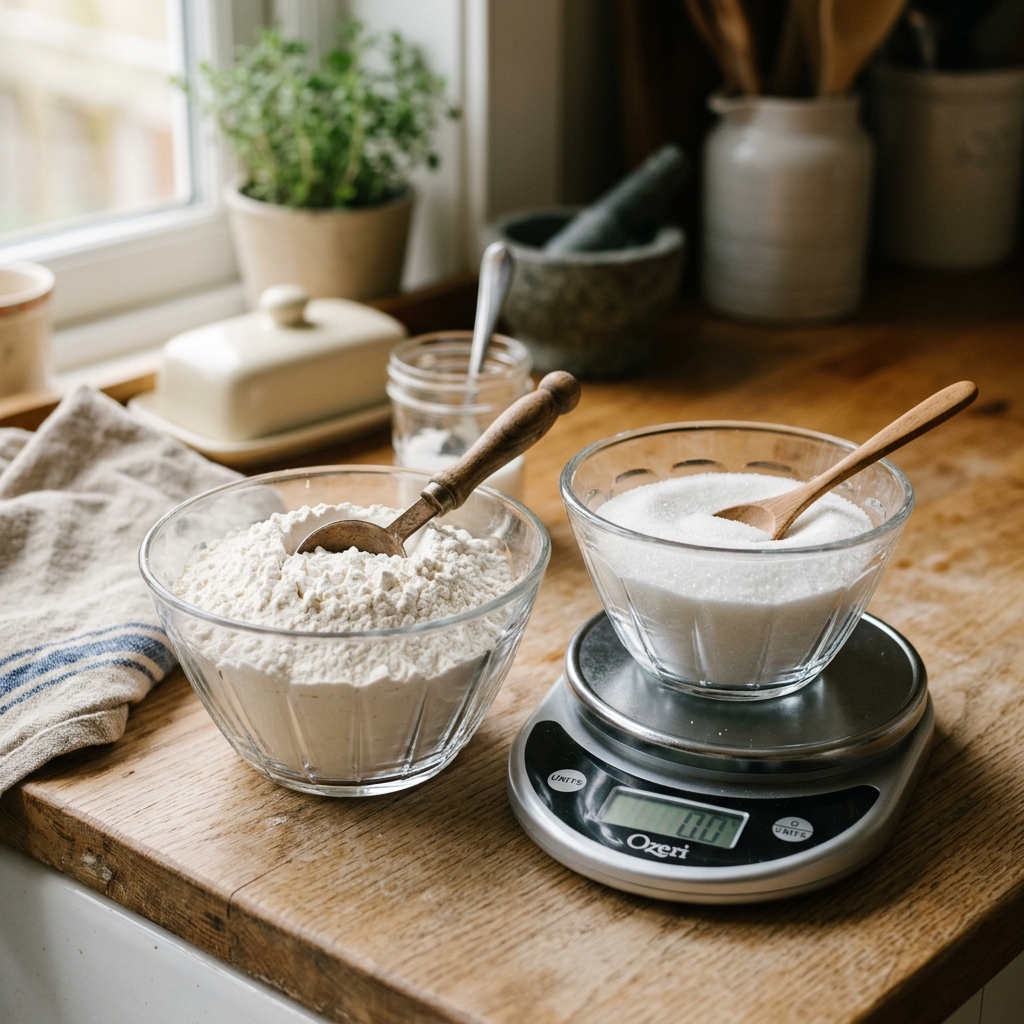
Flour is made of tiny, powdery grains that settle over time. As the bag travels from the mill to the grocery store, and sits in your pantry, gravity packs those grains closer and closer together, squeezing out the air.
If you scoop directly from a settled bag of flour, you're scooping compacted flour. If you fluff it up first with a fork, you add air back in. The compacted cup will weigh far more than the fluffed cup, even though both look like a full cup of flour.
Think of flour like a pillow. You can fluff it up with air or compress it down. Squished flour packs far more weight into a cup than fluffed flour.
2. The Way You Scoop
How you get flour out of the bag and into your cup changes the weight drastically:
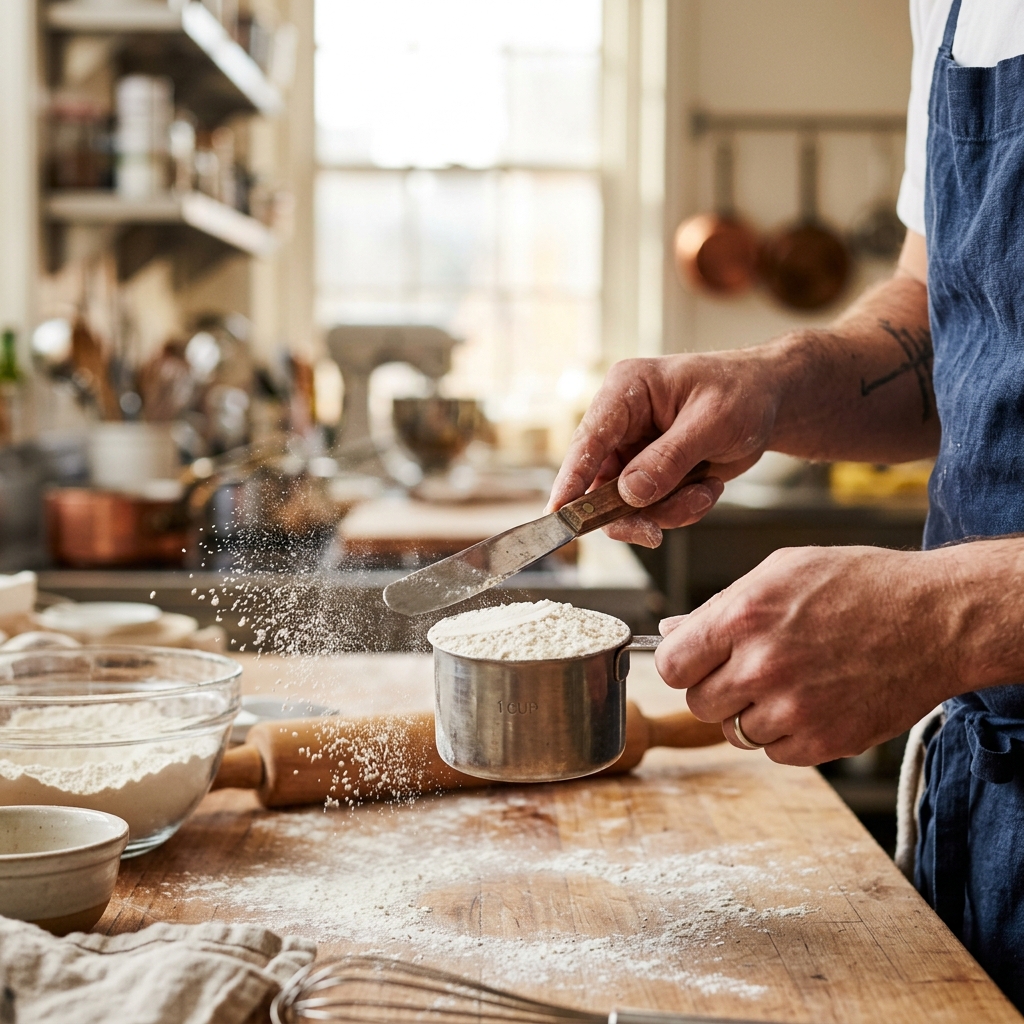
| Measurement Technique | Average Weight per Cup | Baking Effect |
|---|---|---|
| Sifted before measuring | 110g | Delicate, dry bakes if recipe assumes spooned |
| Spooned & Leveled (Standard) | 120g - 125g | Normal, expected rise and moisture |
| Scooped (Direct from bag) | 140g - 150g | Dense, dry cakes; cookies that don't spread |
| Packed (Tapped on counter) | 160g+ | Tough bread, heavy dry pastries |
3. Humidity and Wet Weather
Flour is **hygroscopic**, which is a fancy scientific term meaning it behaves like a sponge, absorbing water right out of the air.
During a humid summer, your flour will soak up moisture, making the grains heavier. In a dry winter, that same flour will dry out and weigh less. A cup of humid flour can easily weigh 5% to 8% more than dry flour, even if you scoop it the exact same way.
Baker's Note
Use Our Calculator
Want to ignore humidity and settling entirely? Use our free Cups to Grams Converter to translate your recipe. Zero out your kitchen scale, pour your flour in grams, and rest easy knowing your dough hydration is spot on.
More Baking Tools
Keep your kitchen measurements accurate with these free tools:
- Cups to Grams Converter — Convert cups of baking ingredients to grams.
- Grams to Cups Converter — Convert weights back to volume cups.
- Baking Pan Size Converter — Swap recipe sizes between different pans.
- Recipe Scaler — Scale recipe servings up or down.
The Bottom Line
Since gravity, humidity, and your scooping technique can alter a cup of flour's weight by 30%, measuring cups are just too risky for baking. Switching to a kitchen scale is the single best way to make sure your bread and cakes turn out perfect every time.
Frequently Asked Questions
Recommended Reading
Why Professional Bakers Weigh Ingredients Instead of Using Measuring Cups
Why do professional bakers refuse to use measuring cups? Because a cup of flour can weigh anywhere from 120g to 165g. Here is why grams will change your baking forever.
Cups vs. Grams: Why Baking by Weight Actually Works
Ever wonder why your chocolate chip cookies turn out different every time you bake them? Let's talk about why swapping your measuring cups for a digital scale is the easiest upgrade you can make.
Why You Should Ditch Your Measuring Cups for a Scale
Baking is all about chemistry, which means weight is king. Here is why measuring cups make your recipes inconsistent, and how a digital scale makes baking faster and cleaner.