Understanding Weight, Volume, and Density in Baking
It's easy to look at a recipe as just a checklist. But once your pan goes into the oven, that recipe becomes a series of chemical reactions. Proteins link up, starches gel, and gases expand to create bubbles.
For this magic to happen, your ingredients need to be balanced by weight (mass), not by how much space they take up (volume). Let's dive into the science of weight, volume, and density, and why understanding them is the secret to baking like a pro.
Baking Science at a Glance
- ›Weight (Mass): Represents the actual amount of matter (atoms) in an ingredient. Units are grams and dry ounces.
- ›Volume (Space): Represents the physical size or three-dimensional space occupied. Units are milliliters and cups.
- ›Density (g/mL): The ratio of mass to volume. Determines how heavy a specific volume of ingredient will be.
- ›Air inclusion: Powders trap variable amounts of air. Air adds volume, but zero weight, making volume cups unreliable.
Convert Using Scientific Densities
Keep air gaps from ruining your baking. Use our free Cups to Grams Converter to swap volume measures for exact gram weights using real density calculations.
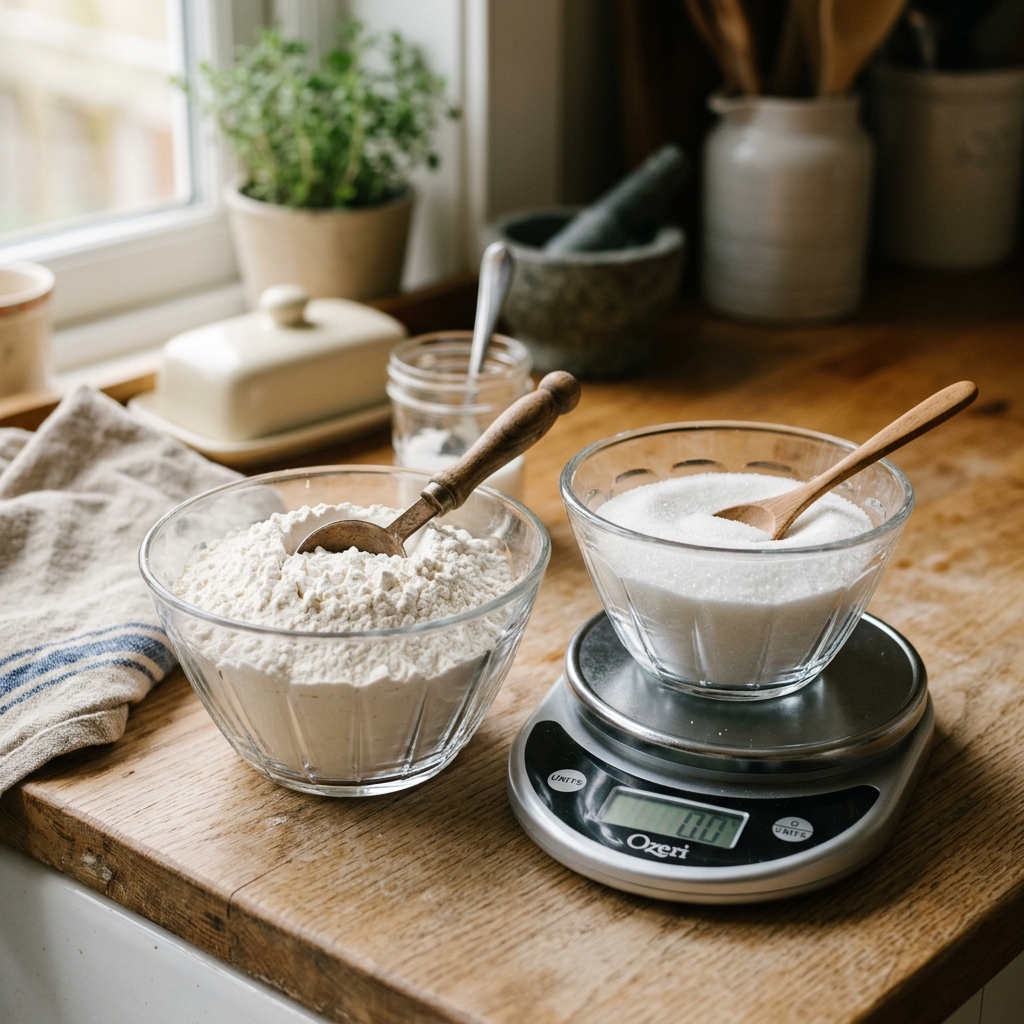
The Problem with Volume: It Changes
In physics, volume is called a "variable property" for powders and solids. That's just a fancy way of saying it changes depending on how you handle it.
Sift some flour, and you're adding air—making it take up more space while keeping the weight exactly the same. Tap your measuring cup on the counter, and the flour packs down, shrinking the volume but cramming more weight into the cup.
This makes volume a moving target. Weight, on the other hand, never lies. A gram of flour has the exact same amount of starch molecules whether it is fluffy and sifted or packed tight at the bottom of a bin.
| Baking Ingredient | Physical State | Density (g/mL) | Weight per US Cup |
|---|---|---|---|
| All-Purpose Flour | Sifted (Airy) | 0.46 g/mL | 110g |
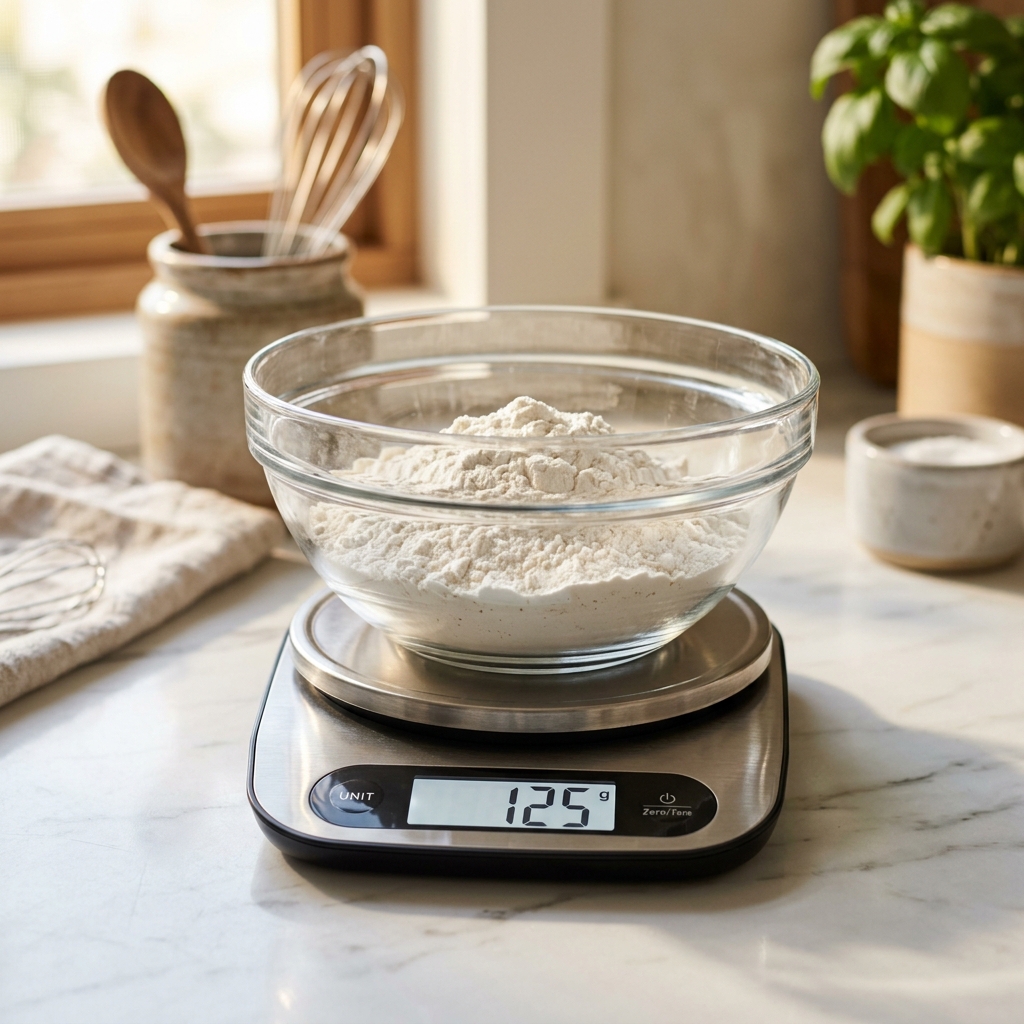
| All-Purpose Flour | Spooned & Leveled | 0.53 g/mL | 125g |
| All-Purpose Flour | Scooped (Packed) | 0.63 g/mL | 150g |
| Honey | Liquid Syrup | 1.44 g/mL | 340g |
Air pockets take up space in a cup but weigh absolutely nothing. Tapping or packing that cup squishes the air out, adding extra flour that will dry out your bread or cake.
Why Hydration Ratios Matter
The single most important ratio in baking is **hydration**—which is the weight of your liquids compared to the weight of your flour.
Flour contains proteins that join forces to form a gluten web when they touch water. This web is what traps steam and gas bubbles, allowing your bread and cakes to rise in the oven.
Get this ratio wrong, and you'll see why baking is so unforgiving:
- Too much flour (low hydration): The gluten network becomes dry and stiff. It can't stretch as gases expand, leaving you with a flat, heavy, and dry crumb.
- Too little flour (high hydration): The gluten web is too weak and wet. It stretches too easily, the bubbles pop, and your cake or bread collapses into a sad, deflated mess.
Baker's Tip
Try Our Converter
Want to take the guesswork out of baking? Use our free Cups to Grams Converter to get exact ingredient weights based on real densities, keeping your hydration ratios perfect.
More Baking Tools
Keep your kitchen measurements accurate with these free tools:
- Cups to Grams Converter — Convert cups of baking ingredients to grams.
- mL and Cups Converter — Swap liquid volumes across different regions.
- Unit Converter — Convert between metric and imperial units.
- Grams to Cups Converter — Convert weights back to volume cups.
The Bottom Line
Baking is chemistry, and chemistry requires exact proportions. Volume cups are full of invisible air gaps, but weight never lies. Once you understand how weight, volume, and density work together, you'll never look at a measuring cup the same way again.
Frequently Asked Questions
Recommended Reading
Why Professional Bakers Weigh Ingredients Instead of Using Measuring Cups
Why do professional bakers refuse to use measuring cups? Because a cup of flour can weigh anywhere from 120g to 165g. Here is why grams will change your baking forever.
Cups vs. Grams: Why Baking by Weight Actually Works
Ever wonder why your chocolate chip cookies turn out different every time you bake them? Let's talk about why swapping your measuring cups for a digital scale is the easiest upgrade you can make.
Why One Cup of Flour Doesn't Always Weigh the Same
Why does a cup of flour weigh different amounts every time you measure it? Learn how settling, humidity, and technique mess with your recipes.