Common Measuring Mistakes That Ruin Baking Recipes
Baking is basically chemistry. When you pop a cake batter in the oven, you're triggering a series of reactions. If your flour, fat, and baking powder aren't in the exact ratios the recipe calls for, those reactions will fall flat.
Even seasoned home cooks make measuring slips that sink cakes, flatten cookies, or make bread dough too dry to rise. Let's look at the most common measuring blunders and how to fix them.
Common Measuring Mistakes (The Quick Version)
- ›Scooping straight from the bag: Packs the flour down, adding up to 30% too much.
- ›Tapping the cup: Settles the powder and packs in 15% extra flour.
- ›Using liquid cups for dry stuff: Makes it impossible to sweep the top flat.
- ›Forgetting to tare: Weighing your ingredients without zeroing out the bowl's weight first.
Convert Cups to Grams
Ditch the guesswork. Use our free Cups to Grams Converter to translate cups to grams, then weigh them on a scale for perfect results.
Mistake #1: Scooping Straight from the Bag
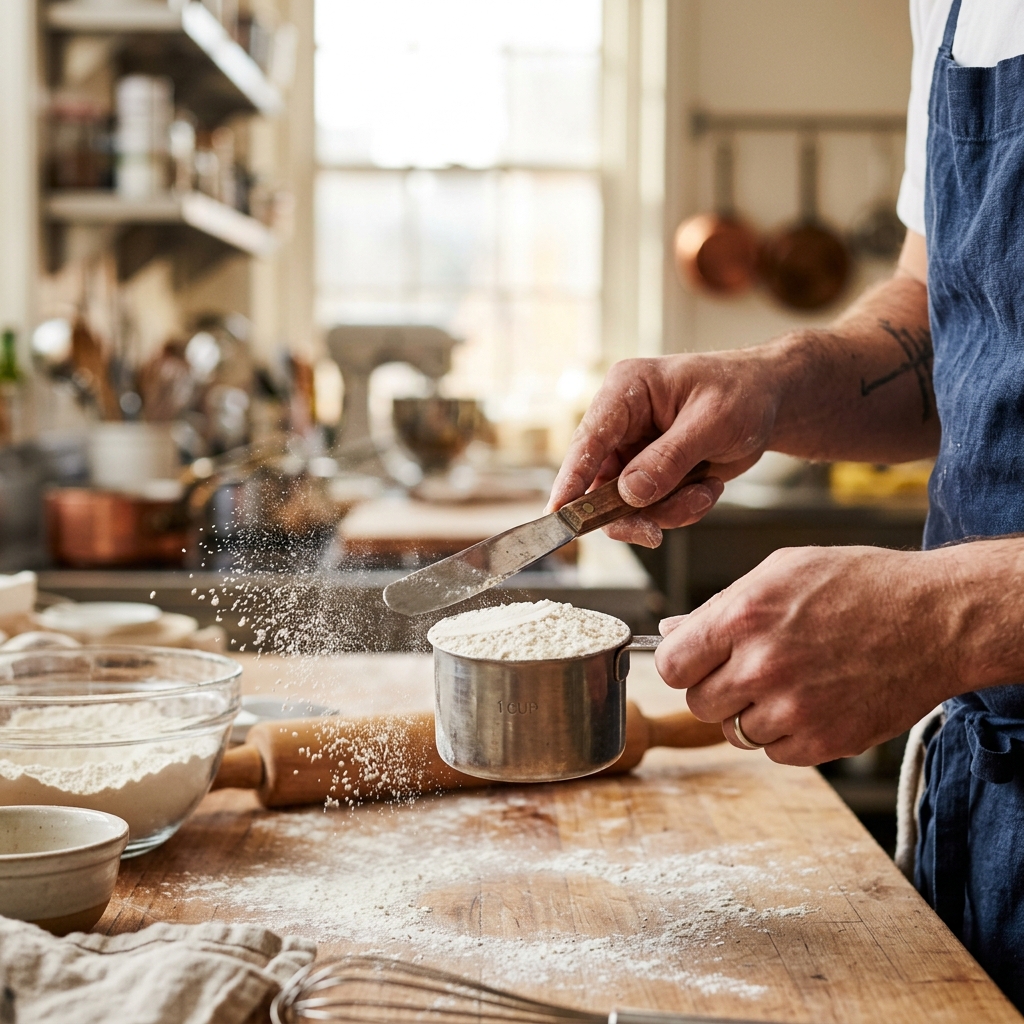
Plunging a measuring cup straight into a bag of flour or sugar packs the flour down. You end up with a dense, compressed cup that weighs way more than it should.
How to fix it: If you are stuck using cups, fluff your flour with a fork first. Spoon it gently into the cup until it heaps over the rim, then sweep off the excess with the back of a butter knife.
Mistake #2: Tapping the Cup on the Counter
As you're spooning flour or cocoa into a cup, it is very tempting to tap the side with your hand or tap the bottom on the counter to level it out.
Don't do it! Every tap shakes out the trapped air, packing the flour closer together. This allows you to fit way too much flour into the cup, adding up to 15% extra weight.
| Ingredient | Correct Weight (Spoon & Level) | Tapped Cup Weight | Error Percentage |
|---|---|---|---|
| All-Purpose Flour | 120g - 125g | 140g - 145g | +15% |
| Bread Flour | 130g | 150g | +15% |
| Cocoa Powder | 85g | 100g | +17% |
Tapping a measuring cup packs the flour tight, adding extra weight that will make your cakes and breads dry and heavy.
Mistake #3: Mixing Up Dry and Liquid Measuring Cups
Dry cups are meant to be filled to the absolute brim so you can sweep them flat. Liquid cups have a pouring spout and lines marked below the rim so you don't spill.
If you scoop flour into a liquid measuring cup, you can't level it off cleanly, which leads to way too much flour in your bowl. If you pour milk into a dry cup, it's almost impossible to fill it to the brim without spilling half of it on your counter.
Kitchen Accuracy
Let Us Do the Math
Measure with absolute precision.
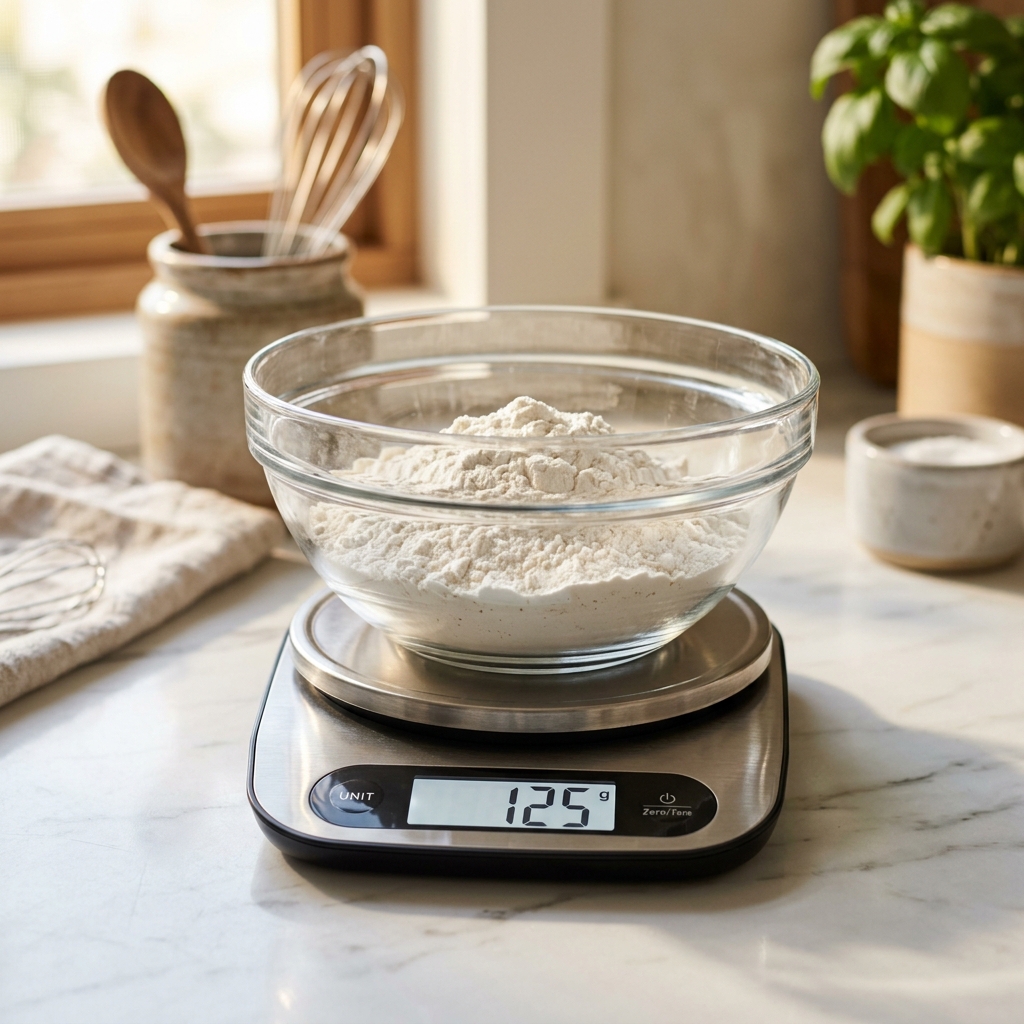
Our free Cups to Grams Converter translates cups to weights in seconds, making scale baking simple.
Related Measurement Tools
Keep your cooking conversions simple with these tools:
- Cups to Grams Converter — Get precise weight values for dry baking ingredients.
- Butter Converter — Convert sticks and cups of butter to grams.
- mL and Cups Converter — Switch liquid volumes across systems.
- Unit Converter — Switch between metric and imperial measurements.
Wrap Up
Good measuring is the foundation of great baking. By fluffing your flour, using the right cups, and resisting the urge to tap, you'll instantly see better results. Better yet, switch to a scale—it is what actually works for perfect bakes and less cleanup.
Frequently Asked Questions
Recommended Reading
Why Professional Bakers Weigh Ingredients Instead of Using Measuring Cups
Why do professional bakers refuse to use measuring cups? Because a cup of flour can weigh anywhere from 120g to 165g. Here is why grams will change your baking forever.
Cups vs. Grams: Why Baking by Weight Actually Works
Ever wonder why your chocolate chip cookies turn out different every time you bake them? Let's talk about why swapping your measuring cups for a digital scale is the easiest upgrade you can make.
Why One Cup of Flour Doesn't Always Weigh the Same
Why does a cup of flour weigh different amounts every time you measure it? Learn how settling, humidity, and technique mess with your recipes.