How to Measure Rice for Cooking and Baking
Rice is one of the most common foods in the world, yet cooking it consistently—without ending up with a mushy paste or hard, undercooked grains—seems to trip up almost everyone at some point.
The secret to perfect rice is all about the water-to-rice ratio. And here's the kicker: the 'cup' marks on your rice cooker are not standard cups. Let's look at how to get your rice fluffy and perfect every single time.
Rice Measurements (The Quick Version)
- ›The 180mL cup trap: The little plastic cup that came with your rice cooker is **180 mL** (a traditional Japanese 'gō'), not a standard 240 mL cup.
- ›It triples in size: Rice swells as it cooks. 1 cup of raw rice will yield **3 cups of cooked rice**.
- ›Watch the water ratios: Long-grain white rice needs a 1:2 ratio. Jasmine or Basmati needs 1:1.5. Brown rice needs 1:2.25.
- ›Weighing is best: A standard US cup of raw white rice weighs about **185 grams**.
Calculate Your Rice and Water Portions
Ditch the mushy rice. Use our free Rice Calculator to find the exact raw rice weight and water volume for the number of plates you're serving.
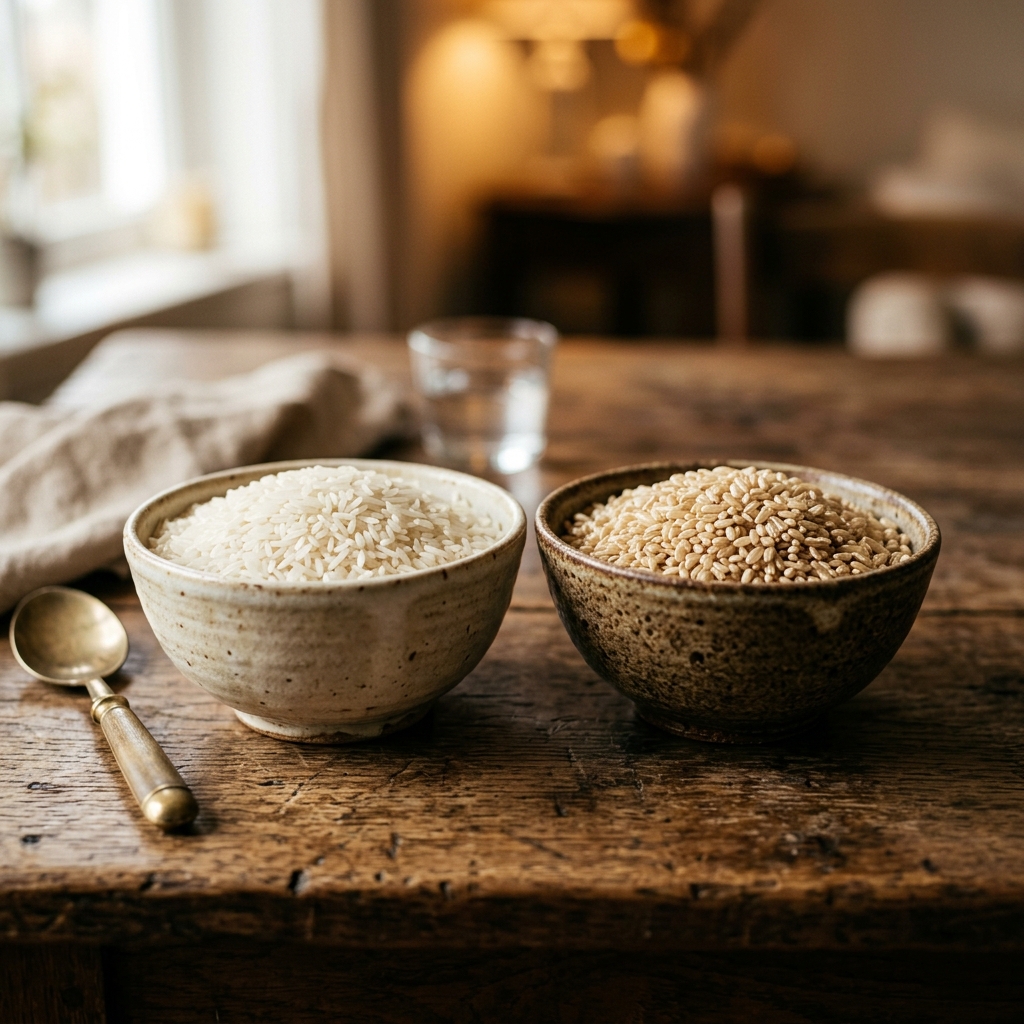
Raw vs. Cooked: How Rice Expands
Since rice grains soak up a ton of water while steaming, they expand and triple in weight by the time they're done.
If a recipe calls for '3 cups of cooked rice' for fried rice, you'll want to measure out **1 cup of raw rice** to cook. Here is a quick breakdown of how common varieties expand:
| Rice Variety | Raw Weight (1 Cup US) | Water Ratio (Volume) | Cooked Volume Yield | Cooked Weight Yield |
|---|---|---|---|---|
| Long Grain White | 185g | 1 : 2 | 3 cups | 555g |
| Jasmine / Basmati | 180g | 1 : 1.5 | 3 cups | 540g |
| Brown Rice | 190g | 1 : 2.25 | 3 cups | 570g |
| Arborio (Risotto) | 200g | 1 : 3 | 3.2 cups | 600g |
| Short Grain Sushi Rice | 200g | 1 : 1.1 | 2.5 cups | 500g |
A rice cooker cup is 180 mL. If you measure your rice with a standard US cup (240 mL) and then fill the water to the cooker's '1 cup' line, you're going to end up with crunchy, dry rice.
How to Measure Rice and Water Using a Scale
If you want perfect rice every single time, weigh it on a scale. Since 1 milliliter of water weighs exactly 1 gram, you can weigh the rice and the water in the same pot with zero cups to wash.
Here is how to cook jasmine rice using a 1:1.5 ratio:
- Set your empty saucepan or rice cooker bowl on the scale and zero it out (**Tare**).
- Pour in your raw rice until it hits **200 grams**. Hit **Tare** again.
- Multiply the rice weight by 1.5 to find the water weight (200g × 1.5 = **300 grams**).
- Pour in cold water until the scale display reads exactly **300 grams**.
This is what actually works in professional kitchens. It guarantees the ratio is perfect, no matter how packed the rice was in the bag.
Inside the Kitchen
Let Us Do the Math
Never guess the water ratio again.
Our free Rice Calculator will tell you exactly how much raw rice and water you need for any serving size or rice variety.
Related Measurement Tools
Keep your conversions simple with these handy tools:
- Rice Calculator — Calculate raw rice and water weights.
- Servings Calculator — Adjust recipe yields for crowd cooking.
- Cups to Grams Converter — Switch cups of dry rice to weight.
- Unit Converter — Switch between metric and imperial kitchen measurements.
Wrap Up
Getting perfect rice isn't magic—it's just a matter of matching your grain and water weights. Keep in mind that a rice cooker cup is 180mL, watch the expansion yields, and you'll never have to scrape mushy or burnt rice out of your pot again.
Frequently Asked Questions
Recommended Reading
How to Measure Flour Correctly: Spoon & Level vs. Scoop & Sweep
The way you scoop flour can alter your baking by 30%. Learn why the spoon-and-level method is your best bet when you don't have a scale.
Butter Measurements Explained: Sticks, Cups, Grams and Tablespoons
How much is a stick of butter? We break down the math for sticks, cups, grams, tablespoons, and ounces, plus look at European vs. American butter.
Almond Flour vs. All-Purpose Flour: Can You Substitute Them 1:1?
Thinking of swapping all-purpose flour for almond flour? It's not a simple 1:1 trade. Here's how to adjust your recipe with the right ratio, extra eggs, and temp settings for baking success.