Butter Measurements Explained: Sticks, Cups, Grams and Tablespoons
If you've ever tried to bake an American recipe outside the US, you've probably run into the "stick of butter" problem. For the rest of the world, butter comes in blocks, making these recipes feel like a foreign language.
Whether you're holding a 250g block wondering how much to cut off for "two sticks," or trying to scoop solid butter into a measuring cup, don't worry. Here is the ultimate guide to butter conversions, without the headache.
Quick Butter Reference
- ›1 Stick: 113 grams = 1/2 cup = 8 tablespoons = 4 ounces
- ›1/2 Stick: 57 grams = 1/4 cup = 4 tablespoons = 2 ounces
- ›2 Sticks: 227 grams = 1 cup = 16 tablespoons = 8 ounces
- ›European Block (250g): About 2.2 US sticks.
Tired of Sticky Measuring Cups?
Stop guessing how much butter to cut. Use our free Butter Converter to instantly swap between sticks, cups, tablespoons, and grams.
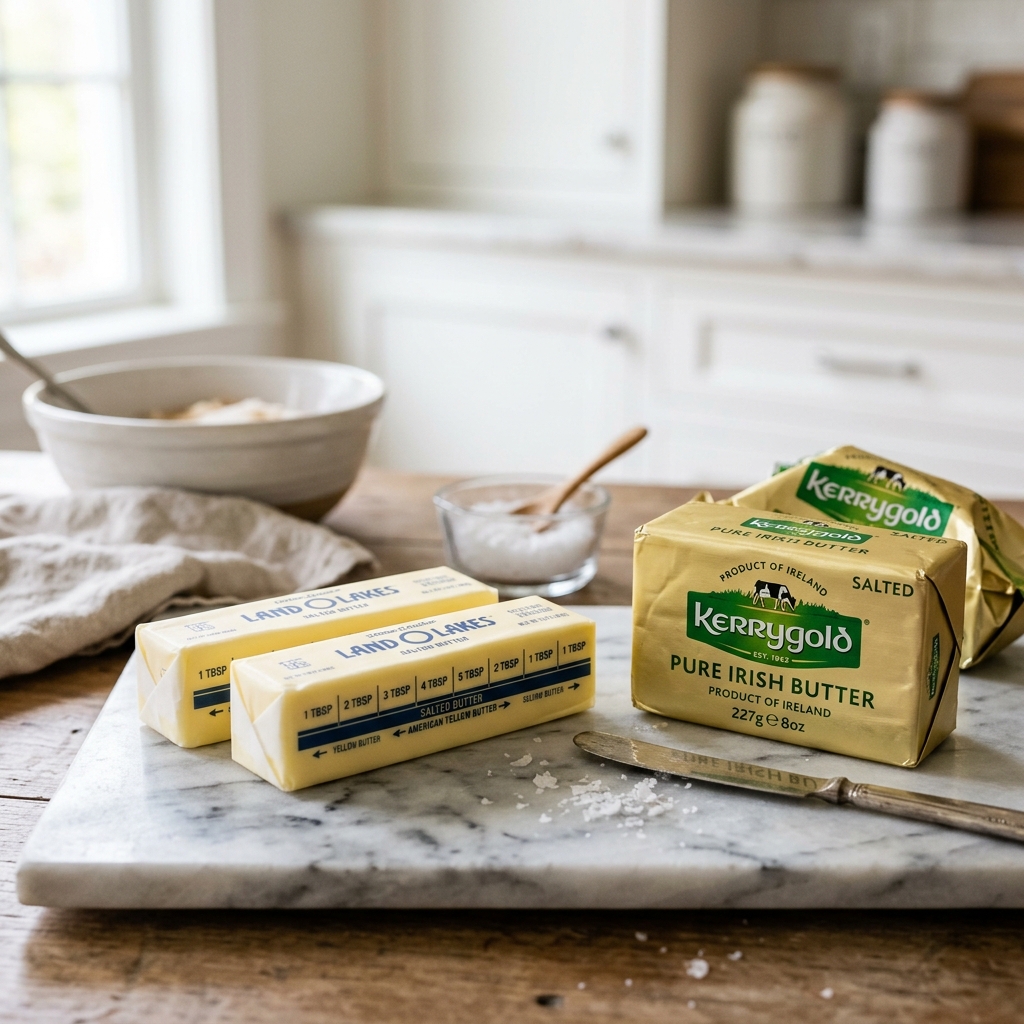
The Only Number You Really Need to Remember
If you remember just one thing, make it this: a standard US stick of butter weighs 113 grams, which is 1/2 cup or 8 tablespoons.
Honestly, memorizing this simple conversion solves almost every butter question you'll ever have. Everything else is just simple division.
For reference, a standard one-pound box of US butter has 4 sticks, which equals 454 grams or 2 cups.
The Complete Butter Conversion Chart
| Sticks | Cups | Tablespoons | Grams | Ounces |
|---|---|---|---|---|
| ¼ stick | ⅛ cup | 2 tbsp | 28g | 1 oz |
| ½ stick | ¼ cup | 4 tbsp | 57g | 2 oz |
| 1 stick | ½ cup | 8 tbsp | 113g | 4 oz |
| 1½ sticks | ¾ cup | 12 tbsp | 170g | 6 oz |
| 2 sticks | 1 cup | 16 tbsp | 227g | 8 oz |
| 3 sticks | 1½ cups | 24 tbsp | 340g | 12 oz |
| 4 sticks | 2 cups | 32 tbsp | 454g | 16 oz (1 lb) |
What Do the Lines on the Wrapper Mean?
If you buy butter in the US, you'll see eight lines printed on the wrapper. Each line represents 1 tablespoon (14g). If your recipe calls for 4 tablespoons, you just slice right at the fourth line. It's incredibly convenient.
It's a great system, but here's a word of warning: brands don't always print those lines perfectly straight, and wrapping can shift during packaging. If you're baking something delicate where precision is key, always weigh it on a scale instead.
Converting Grams to Cups & Sticks
If your recipe calls for grams but you only have cups or sticks, here is a handy cheat sheet:
| Grams | Sticks | Cups | Tablespoons |
|---|---|---|---|
| 14g | ⅛ stick | 1 tbsp | 1 tbsp |
| 28g | ¼ stick | ⅛ cup | 2 tbsp |
| 57g | ½ stick | ¼ cup | 4 tbsp |
| 100g | ~⅞ stick | ~7 tbsp | 7 tbsp |
| 113g | 1 stick | ½ cup | 8 tbsp |
| 125g | ~1.1 sticks | ~½ cup + 1 tbsp | ~9 tbsp |
| 150g | ~1.3 sticks | ~⅔ cup | ~10.5 tbsp |
| 200g | ~1.75 sticks | ~⅞ cup | ~14 tbsp |
| 227g | 2 sticks | 1 cup | 16 tbsp |
| 250g | ~2.2 sticks | ~1 cup + 2 tbsp | ~17.5 tbsp |
| 454g | 4 sticks | 2 cups | 32 tbsp |
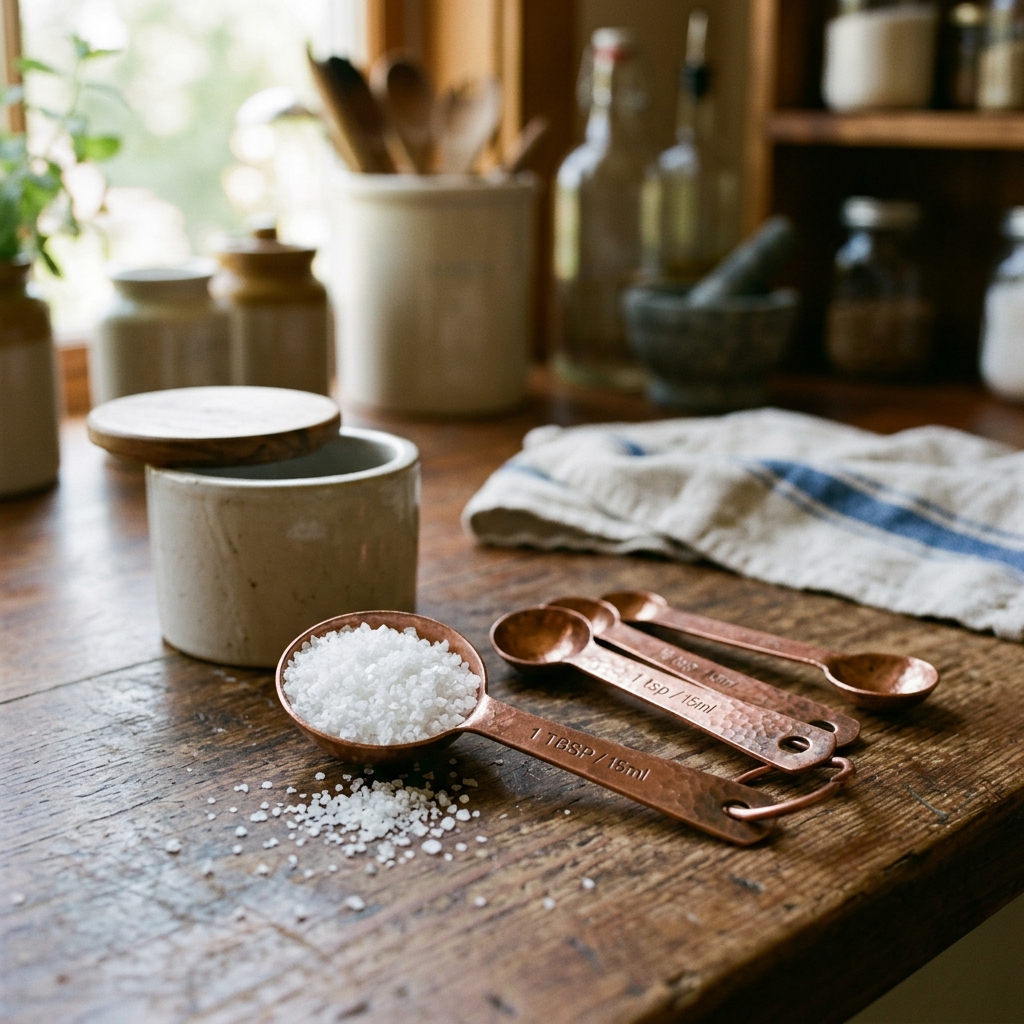
How to Measure Soft vs. Melted Butter
Measuring solid butter in a cup is hard enough, but once it softens or melts, volume cups become highly inaccurate.
- Softened butter: If you must use cups, pack the softened butter firmly into a dry measuring cup to get rid of air pockets, then sweep the top flat.
- Melted butter: Melt it first, then pour it into a liquid measuring cup. Keep in mind that a tiny bit of water evaporates during melting, making it slightly lighter than solid butter. For cakes, it's fine, but for pastries, weigh it.
- The easiest way: Just place your mixing bowl on a digital scale, tare it to zero, and spoon in your butter (solid, soft, or melted) until you hit the exact gram weight. You'll save yourself from washing extra dishes!
American vs. European Butter: Does It Really Matter?
Actually, yes—especially if you're making pastries.
By law, American butter must be at least 80% butterfat. European-style butter (like Kerrygold or Plugra) contains 82% to 86% butterfat and less water. That 2% to 6% difference doesn't sound like much, but less water means more fat in your dough. That translates to flakier pie crusts, tender croissants, and a much richer, butterier flavor.
For a standard batch of chocolate chip cookies or banana bread, you won't notice a huge difference. But if you're making croissants, puff pastry, or anything where you fold butter into dough repeatedly, European butter is a game-changer. The lower water content keeps the butter from melting into the dough, giving you those gorgeous flaky layers.
As far as measurements go, the weight conversion is exactly the same for both. A tablespoon of European butter weighs the same as a tablespoon of American butter—it just performs better in the oven.
Salted vs. Unsalted Butter: The Baker's Choice
I always recommend unsalted butter for baking, and here is why: every butter brand adds a different amount of salt. There's no standard. If you use salted butter, you have no idea how much salt you're actually adding to your dough, which can throw off the balance.
Most recipes are written with unsalted butter in mind, allowing you to add the exact amount of kosher salt you want. If you only have salted butter on hand, you can reduce the recipe's added salt by about 1/4 teaspoon per stick, but you'll still be guessing.
Save the salted butter for spreading on toast, melting over corn, or finishing a steak—that's where that immediate pop of salt flavor really shines.
How Butter Substitutes Behave in the Oven
If you run out of butter or need a dairy-free option, here is what happens when you swap it out:
- Oils (Vegetable, Canola, Coconut): Use 3/4 the amount of butter. Since butter is only 80% fat and oil is 100% fat, you need less of it. Oil makes cakes and muffins incredibly moist, but you lose that signature butter flavor and structure. It's great for brownies, but not ideal for cookies.
- Vegan Butter: Most of these are designed as a direct 1:1 swap by weight or volume. They work surprisingly well for basic cookies and cakes, though you might get mixed results with complex pastries.
- Applesauce or Greek Yogurt: You can swap these 1:1 by volume in muffins or quick breads. They make the bake very moist and low-fat, but you will lose the rich mouthfeel and crisp browning. Skip this swap for cookies or pie crusts.
Try Our Butter Converter
Want to convert a custom butter measurement?
Use our free Butter Converter Tool. Just plug in your measurements, and it will instantly translate sticks, cups, tablespoons, ounces, and grams so you can keep baking.
More Handy Kitchen Tools
Keep your kitchen measurements accurate with these free calculators:
- Butter Converter — Convert butter measurements between cups, grams, and sticks.
- Unit Converter — Quickly switch between metric and imperial.
- Cups to Grams Converter — Swap volume cups to weight measurements.
- Recipe Scaler — Easily scale your recipes up or down.
Wrapping Up
Whether you're using American sticks or a European block, having these conversions handy will save you a lot of kitchen headaches. When in doubt, grab your digital scale and weigh your butter in grams—it's the easiest way to make sure your bakes turn out perfectly. Happy baking!
Frequently Asked Questions
Recommended Reading
How to Measure Flour Correctly: Spoon & Level vs. Scoop & Sweep
The way you scoop flour can alter your baking by 30%. Learn why the spoon-and-level method is your best bet when you don't have a scale.
Almond Flour vs. All-Purpose Flour: Can You Substitute Them 1:1?
Thinking of swapping all-purpose flour for almond flour? It's not a simple 1:1 trade. Here's how to adjust your recipe with the right ratio, extra eggs, and temp settings for baking success.
Bread Flour vs. All-Purpose Flour: When to Make the Switch
Wondering if you can swap all-purpose flour for bread flour? Here is how protein content and water absorption change your bakes, plus how to convert them.