How to Measure Oats for Baking: Rolled, Quick & Steel-Cut
Oats are a fantastic way to add chew, texture, and a nutty flavor to chocolate chip cookies, fruit crisps, and muffins. But because oat flakes are uneven and trap a ton of air, measuring them with cups is always a gamble.
To make matters worse, a cup of steel-cut oats is twice as heavy as a cup of rolled oats. Knowing the difference in density is the secret to avoiding rock-hard cookies or crumbly muffins. Let's look at what actually works.
Measuring Oats (The Quick Version)
- ›Watch the densities: Steel-cut oats are nearly twice as heavy as rolled oats per cup (170 grams compared to 90 grams).
- ›Weighing is what actually works: Weighing your oats in grams ensures you don't accidentally dry out your dough or batter.
- ›If you are using cups: Stir the oats to loosen them up, spoon them into your measuring cup, and sweep off the excess. Don't shake or tap the cup to pack them in.
Convert Oats Cups to Grams
Keep your oatmeal cookies soft and chewy. Use our free Cups to Grams Converter to find the exact weight in grams for rolled, quick, and steel-cut oats.
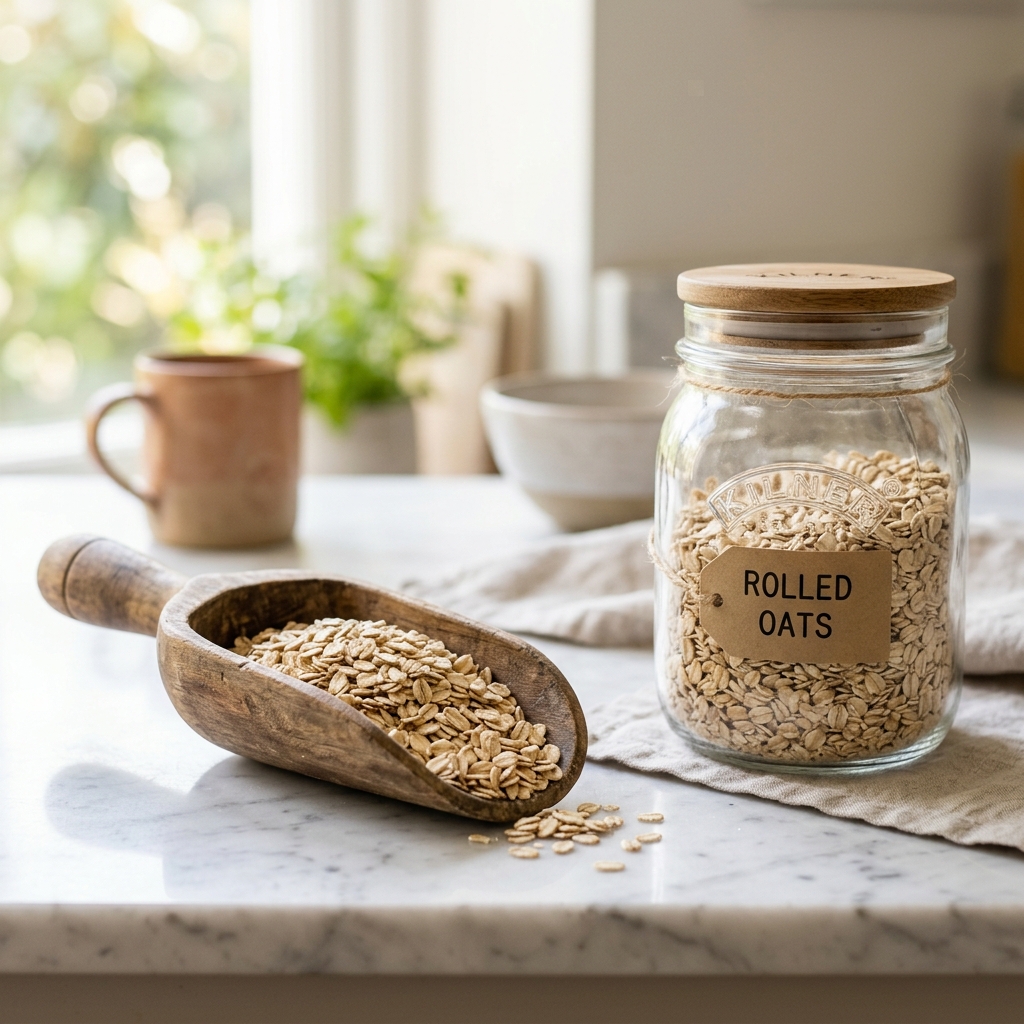
Rolled vs. Quick vs. Steel-Cut: The Weight Differences
All oats start out as whole oat groats. But how they are cut, steamed, and rolled changes how tightly they pack into a measuring cup:
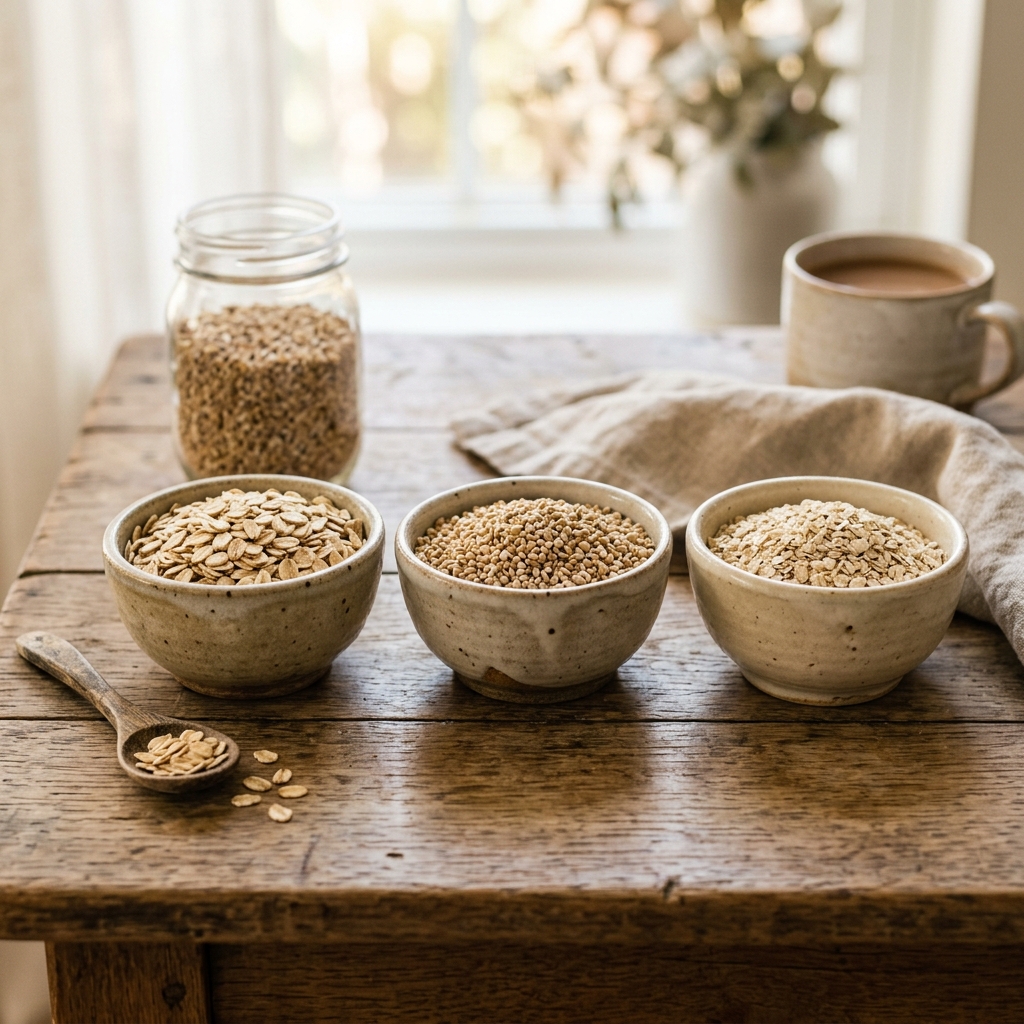
- Rolled Oats (Old Fashioned): These groats are steamed and rolled flat. They form large, wide flakes that trap a lot of air. A standard cup weighs **90 grams**.
- Quick Oats (Instant): These are cut into tiny pieces and rolled thin so they cook fast. They pack a little tighter but still average about **90 grams** per cup.
- Steel-Cut Oats (Irish): These are not rolled at all—just chopped into tiny, dense pebbles. Because they pack so tightly, a cup weighs a whopping **170 grams**.
| Oat Variety | Weight per Cup (Grams) | Weight per Cup (Ounces) | Moisture Absorption Speed |
|---|---|---|---|
| Steel-Cut Oats | 170g | 6.0 oz | Very Slow (requires boiling) |
| Rolled Oats (Old Fashioned) | 90g | 3.2 oz | Medium (good for chewy bakes) |
| Quick Oats | 90g | 3.2 oz | Fast (makes bakes softer) |
| Oat Flour | 92g | 3.25 oz | Very Fast (absorbs liquid quickly) |
Swapping steel-cut oats for rolled oats using measuring cups doubles the weight of oats in your bowl, completely soaking up all your liquid.
How Oats Can Dry Out Your Dough
Think of oats as tiny sponges. They soak up liquid slowly while you mix, and then absorb it rapidly once they hit the heat of the oven.
If you scoop rolled oats straight from a settled container, you could easily pack **110 grams** into a cup instead of the standard 90 grams. If you need 2 cups, that's an extra **40 grams of starch** in your bowl. Because oats absorb a lot of moisture, this extra starch will dry out your cookies, leaving them tough and crumbly instead of soft and chewy.
Ingredient Note
Let Us Do the Math
Keep your oatmeal cookies perfectly moist.
Our free Cups to Grams Converter to find the exact weight for whatever oats you're baking with.
Related Measurement Tools
Keep your conversions clean with these tools:
- Cups to Grams Converter — Get precise weight values for dry baking ingredients.
- Recipe Scaler — Scale recipe servings up or down.
- Unit Converter — Switch between metric and imperial measurements.
- Grams to Cups Converter — Convert weights back to volume cups.
Wrap Up
Because oat flakes are so irregular and trap a lot of air, cup measurements are rarely consistent. Switching to weighing in grams is the easiest way to make sure your oatmeal cookies stay soft and your breads turn out tender.
Frequently Asked Questions
Recommended Reading
How to Measure Flour Correctly: Spoon & Level vs. Scoop & Sweep
The way you scoop flour can alter your baking by 30%. Learn why the spoon-and-level method is your best bet when you don't have a scale.
Butter Measurements Explained: Sticks, Cups, Grams and Tablespoons
How much is a stick of butter? We break down the math for sticks, cups, grams, tablespoons, and ounces, plus look at European vs. American butter.
Almond Flour vs. All-Purpose Flour: Can You Substitute Them 1:1?
Thinking of swapping all-purpose flour for almond flour? It's not a simple 1:1 trade. Here's how to adjust your recipe with the right ratio, extra eggs, and temp settings for baking success.