How to Measure Honey, Syrup, and Other Sticky Ingredients
Trying to measure out a half-cup of honey or molasses is easily one of the most frustrating chores in the kitchen. You pour it into the cup, wait for it to slowly level out, and then scrape like crazy with a spatula—only to watch a thick, sticky layer stay glued to the bottom.
Leaving that residue behind isn't just annoying—it actually throws off your baking ratios. In things like bread or cake, sugar does more than sweeten; it keeps the crumb soft. Leave 15% of your honey in the cup, and your cake will turn out dry and bland. Here is how to measure sticky stuff the right way.
Measuring Sticky Ingredients (The Quick Version)
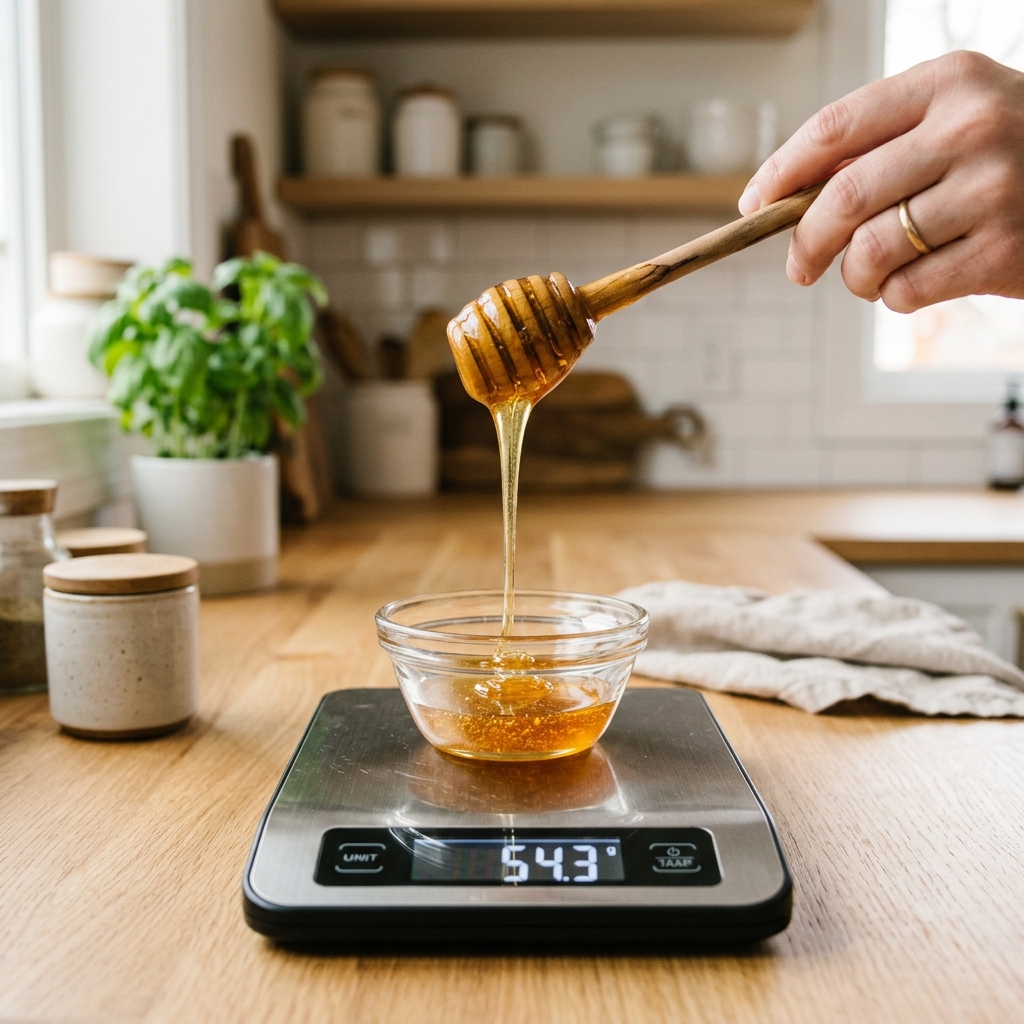
- ›Weighing is what actually works: Set your bowl on a digital scale, zero it out, and pour the syrup straight in. No dirty cups, no cleanup.
- ›Spray the cup: Give your measuring cup or spoon a quick spritzing of neutral cooking spray first. The syrup will slide out like magic.
- ›Watch the weight: Syrups are heavy. A cup of honey weighs a massive 340 grams, while a cup of water is only 236 grams.
Convert Sticky Ingredients to Grams
Ditch the sticky measuring cups. Use our free Cups to Grams Converter to find the exact weight in grams for honey, molasses, and syrups.
Why Measuring Cups Don't Work for Syrups
Syrups are incredibly thick and slow. They love to cling to glass, metal, and plastic, and thanks to surface tension, a good portion of the sweetener will always stay behind on the cup walls.
If a recipe calls for 1/4 cup of honey (85 grams) and you measure by volume, you could easily leave 15 grams behind in the cup. That is an **18% error** in your dough's sugar ratio. In yeast breads, sugar feeds the yeast and keeps the gluten tender. Missing that 18% means a slower rise and a denser loaf.
| Liquid Sweetener | Weight per Cup (Grams) | Weight per Tbsp (Grams) | Density vs. Water |
|---|---|---|---|
| Honey | 340g | 21.3g | 1.44× heavier |
| Molasses | 340g | 21.3g | 1.44× heavier |
| Maple Syrup | 312g | 19.5g | 1.32× heavier |
| Corn Syrup | 328g | 20.5g | 1.39× heavier |
| Vegetable Oil | 218g | 13.6g | 0.92× lighter |
Trick #1: Use a Digital Scale (The Chef's Choice)
This is how we do it in professional kitchens: skip the cups entirely.
- Convert the cup amount to grams (for example, a half-cup of maple syrup is 156 grams).
- Set your mixing bowl on the scale and press **Tare** to zero it out.
- Pour the syrup straight from the jar or bottle until the scale hits 156 grams.
It takes seconds, it's perfectly accurate, and you have zero sticky cups to wash.
Trick #2: Grease Your Cups First
If you don't have a digital scale handy, this oil barrier trick is a lifesaver:
Spritz the inside of your cup or spoon with a thin coat of non-stick cooking spray, or wipe it with a tiny bit of neutral oil before pouring. The oil creates a barrier so the sugars can't bond to the cup. When you dump it out, the honey or syrup will slide right out in a clean dome, leaving the cup completely clean.
*Chef's Tip: If your recipe needs both oil and honey, measure the oil first. The leftover film in the cup will act as a perfect, built-in release agent when you pour the honey in next!*
Baker's Note
Let Us Do the Math
Ditch the sticky cups.
Our free Cups to Grams Converter converts honey, molasses, and syrups to exact weights so you can scoop them directly onto your scale.
Related Measurement Tools
Keep your conversions simple with these handy tools:
- Cups to Grams Converter — Get precise weight values for dry and sticky baking ingredients.
- mL and Cups Converter — Adjust regional liquid cups.
- Unit Converter — Switch between metric and imperial measurements.
- Grams to Cups Converter — Convert weights back to volume cups.
Wrap Up
Measuring sticky ingredients doesn't have to be a messy headache. By switching to weights on a scale or using the greased cup trick, you'll get perfect accuracy and a clean kitchen.
Frequently Asked Questions
Recommended Reading
How to Measure Flour Correctly: Spoon & Level vs. Scoop & Sweep
The way you scoop flour can alter your baking by 30%. Learn why the spoon-and-level method is your best bet when you don't have a scale.
Butter Measurements Explained: Sticks, Cups, Grams and Tablespoons
How much is a stick of butter? We break down the math for sticks, cups, grams, tablespoons, and ounces, plus look at European vs. American butter.
Almond Flour vs. All-Purpose Flour: Can You Substitute Them 1:1?
Thinking of swapping all-purpose flour for almond flour? It's not a simple 1:1 trade. Here's how to adjust your recipe with the right ratio, extra eggs, and temp settings for baking success.