How to Halve a Recipe Without Mistakes
Cutting a recipe in half is a great way to save food when you're cooking for one or two. But if you just go down the list and divide everything by two, you might end up with a kitchen disaster.
If you're making soup or a stir-fry, halving is pretty forgiving. Baking, though, is a science. Trying to divide awkward fractions like 1/3 cup or split a single egg in half can easily throw off the whole recipe.
How to Halve a Recipe (The Quick Version)
- Divide everything by two: Cut the weight of flour, sugar, fats, and liquids exactly in half.
- Grab a digital scale: Cups are notoriously unreliable, especially when you try to divide them. Weighing in grams is what actually works.
- Whisk your eggs before dividing: Whisk the egg completely first, then weigh out exactly half (25 grams).
- Pick a pan with half the surface area: When halving a cake or brownies, you want a pan with half the area (like an 8x8-inch square instead of a 9x13-inch pan) so your batter isn't too thin.
- Keep the oven temperature, but watch the clock: Bake at the same temperature, but start checking if it's done 5 to 10 minutes early.
Skip the Math with Our Recipe Scaler
Don't stress over fractions or egg math. Drop your ingredients into our free tool to halve, double, or scale any recipe to fit your table instantly.
Why Volume Fails and Weight Wins
The real headache when scaling down is that cups and spoons don't divide cleanly. Cut 1/3 cup in half, and you get 1/6 cup—good luck finding that scoop in your kitchen drawer.
Plus, cups are wildly inconsistent. A cup of flour you fluff up might weigh 120 grams, while one scooped straight from the bag can easily hit 150 grams. Halving those volume scoops just doubles down on the guesswork.
Weighing in grams fixes this. Grams divide beautifully. If a recipe needs 120 grams of flour, half is exactly 60 grams. No awkward fractions, no guessing, and no packing flour into cups.
Step 1: Halving Common Dry Ingredients
If you have to use cups, use this quick guide to convert them to grams or tablespoons before cutting them in half:
| Ingredient | 1 US Cup (Grams) | 1/2 Cup (Grams) | Halved Volume Equivalent |
|---|---|---|---|
| All-Purpose Flour | 120g | 60g | 1/2 cup (or 8 tbsp) |
| Granulated White Sugar | 200g | 100g | 1/2 cup (or 8 tbsp) |
| Brown Sugar (Packed) | 200g - 213g | 100g - 106.5g | 1/2 cup packed |
| Butter (Solid) | 227g (2 sticks) | 113.5g (1 stick) | 1/2 cup (or 1 stick / 8 tbsp) |
| Water / Milk | 240g | 120g | 1/2 cup (or 8 tbsp) |
| Cocoa Powder | 100g | 50g | 1/2 cup (or 8 tbsp) |
Step 2: How to Split Awkward Fractions
When you run into weird cup sizes, this table shows you how to measure them out using tablespoons and teaspoons:
| Original Measurement | Halved Measurement | Equivalent in Tablespoons/Teaspoons |
|---|---|---|
| 1 Cup | 1/2 Cup | 8 tablespoons |
| 3/4 Cup | 3/8 Cup | 6 tablespoons |
| 1/2 Cup | 1/4 Cup | 4 tablespoons |
| 1/3 Cup | 1/6 Cup | 2 tablespoons + 2 teaspoons |
| 1/4 Cup | 1/8 Cup | 2 tablespoons |
| 1 Tablespoon | 1/2 Tablespoon | 1.5 teaspoons |
| 1 Teaspoon | 1/2 Teaspoon | 1/2 teaspoon |
| 1/2 Teaspoon | 1/4 Teaspoon | 1/4 teaspoon |
Baker's Note
Step 3: How to Split a Single Egg
Here is a classic kitchen puzzle: How do you measure out half an egg?
Egg whites glue things together, while the yolk adds fat and moisture. Trust me, if you try to split an egg by just using the white or the yolk, you will completely ruin the texture of your bake.
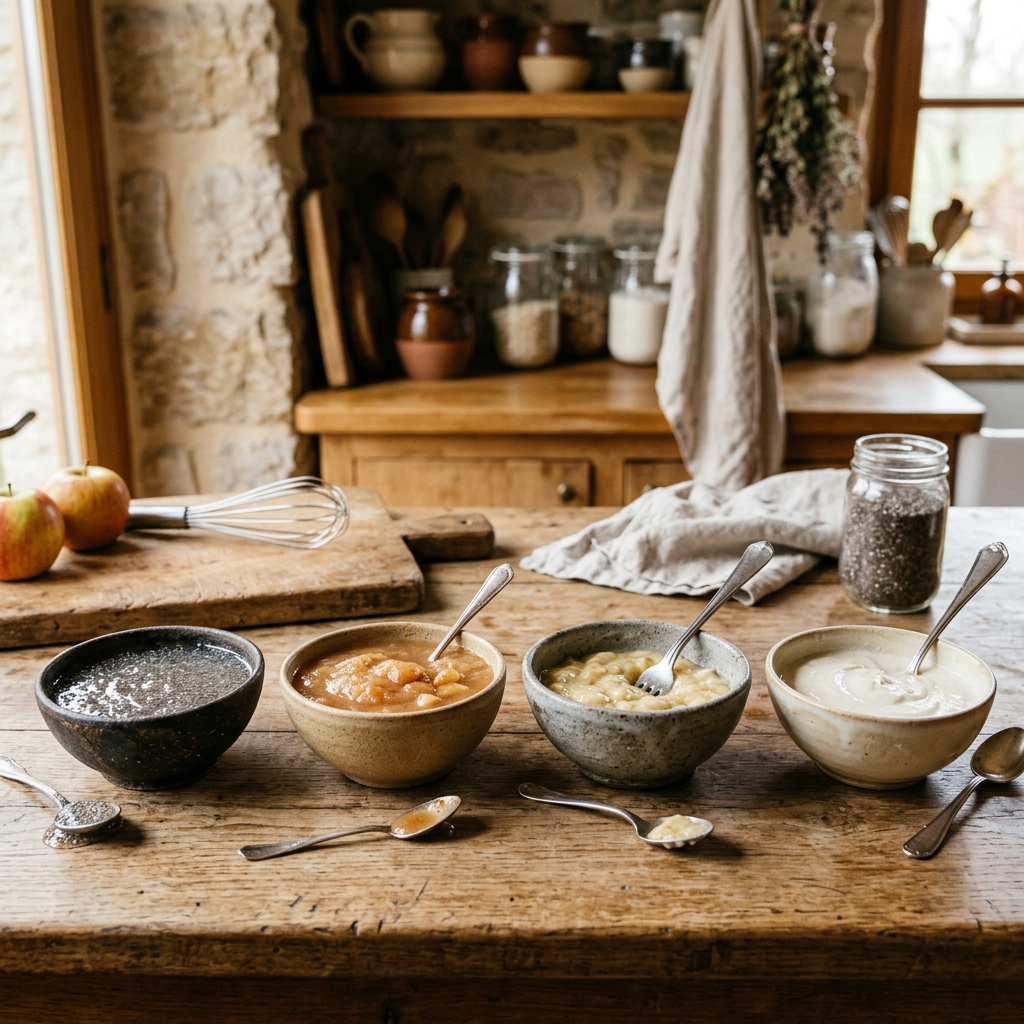
Here is what actually works: Crack the egg into a small cup. Whisk it with a fork until the white and yolk are completely blended.
- By Weight (Highly Recommended): Set a small bowl on your scale, zero it out, and pour in exactly 25 grams of the whisked egg. That is exactly half of a standard large egg.
- By Volume: If you don't have a scale, scoop out exactly 1.5 tablespoons of the whisked egg.
Step 4: Pick the Right Pan Size
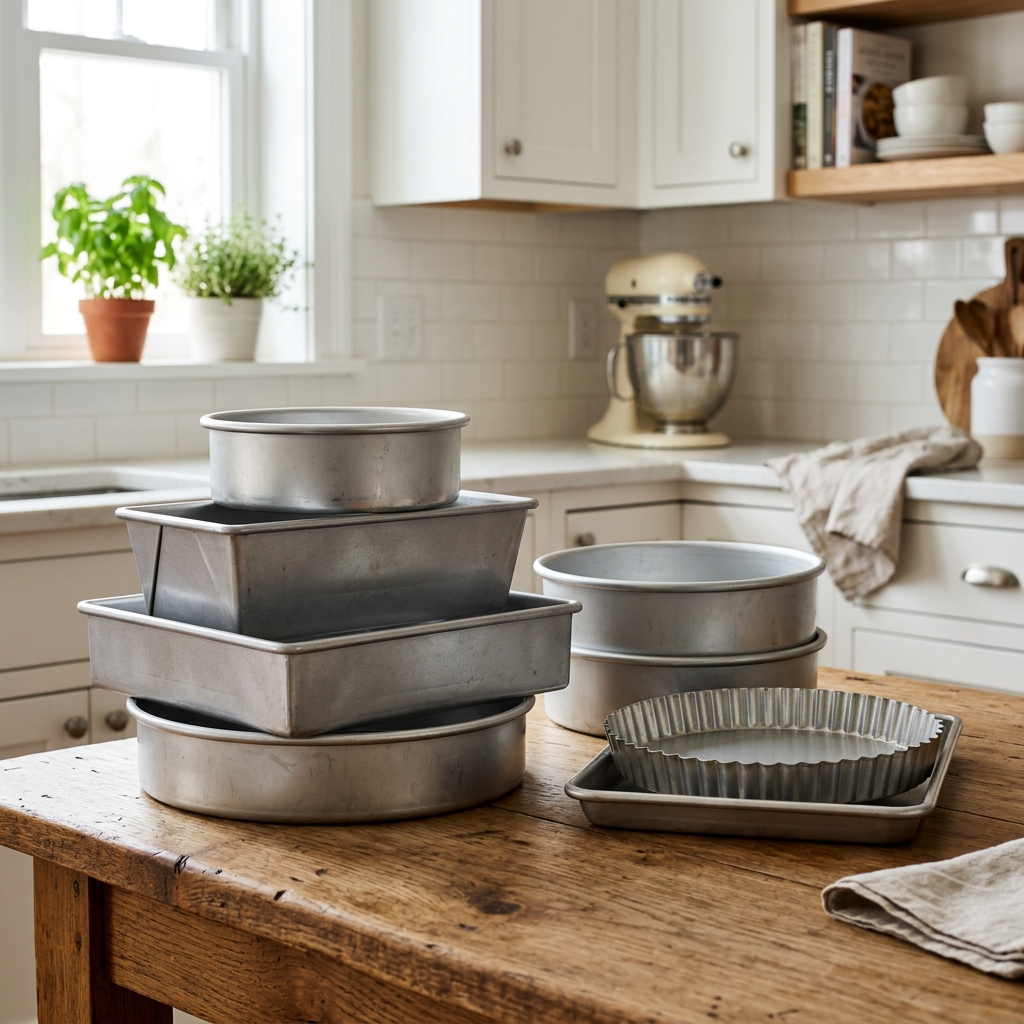
When you cut a batter recipe in half, you have to shrink the pan too. If you pour a half-batch of brownies into a giant 9x13 pan, they will spread thin as a cracker, bake too fast, and end up dry and tough.
To keep the thickness right, you want a pan with about half the surface area of the original.
| Original Pan Size | Surface Area | Halved Pan Alternative | Surface Area |
|---|---|---|---|
| 9x13-inch rectangular pan | 117 sq. inches | 8x8-inch square pan | 64 sq. inches |
| 9-inch round cake pan | 63.6 sq. inches | 6-inch round cake pan | 28.3 sq. inches |
| 8x8-inch square pan | 64 sq. inches | 8.5x4.5-inch loaf pan | 38.3 sq. inches |
| 10-inch Bundt pan | ~78 sq. inches | 6-inch Bundt pan | ~28 sq. inches |
Inside the Kitchen
Step 5: How to Handle Baking Time
A lot of people think that halving a recipe means you cut the baking time in half. That is a quick way to burn your cake.
Bake time depends on how deep the batter is. If you use a smaller pan to keep the batter depth the same, the heat has to travel the same distance to the center. That means the bake time will actually stay about the same as the original.
If you use a slightly larger pan and the batter is thinner, the heat will get to the center faster. If that happens, keep the oven temp the same, but start checking for doneness 10 to 15 minutes early with a toothpick or thermometer.
Bake times do not scale in a straight line. If the batter is just as deep, it needs the same time to bake.
When You Should Never Halve a Recipe
Most dishes are easy to scale down, but a few recipes just do not behave well when halved:
- Small Batches of Bread: Yeast dough needs a certain bulk to knead properly. If you halve a small bread recipe, the dough might sit at the bottom of your stand mixer bowl and never even touch the hook.
- Soufflés and Custards: These depend on exact heat flow and volume to rise and set. A tiny mistake in pan size can leave you with a flat soufflé.
- Tiny Amounts of Baking Powder or Spices: Standard spoons get very inaccurate below 1/8 teaspoon. If you must scale these down, grab a precision scale.
How the Pros Do It: Baker's Percentages
Professional bakers do not mess around with cups or ounces. They use baker's percentages, calculating every ingredient as a percentage of the flour weight.
To cut a recipe in half, they just weigh the flour they need, then multiply that by the percentages. This keeps the moisture, salt, and yeast ratios absolutely perfect, no matter the batch size.
Let Us Do the Math
Ready to get baking? Skip the paper calculations, awkward egg conversions, and pan size math.
Our Recipe Scaler Tool takes care of the numbers. Just type in your ingredients, set it to 0.5x, and get precise weights ready for your scale.
Related Measurement Tools
Keep your kitchen math clean with these handy converters:
- Recipe Scaler — Scale any recipe up or down by servings.
- Servings Calculator — Adjust ingredient quantities based on portion counts.
- Baking Pan Size Converter — Compare pan areas and adjust baking times.
- Cups to Grams Converter — Get precise weight values for dry baking ingredients.
Wrap Up
Cutting a recipe in half is easy once you know how to split an egg and pick the right pan. Switch to weighing your ingredients, use our scaling tools, and your small-batch bakes will turn out just as good as the full size.
Frequently Asked Questions
Recommended Reading
How to Scale a Recipe Up or Down Without Ruining It
Want to scale a recipe up or down? Here is how to calculate your scaling factor and adjust tricky ingredients like yeast, baking powder, and spices so your food still tastes great.
How to Double a Recipe Without Ruining the Bake
Scaling up a recipe isn't just about multiplying every ingredient by two. Here is what actually works for leaveners, spices, and baking times so your double batch turns out great.
How to Triple a Recipe Without Ruining It
Making a massive batch? Here is why you can't just multiply every ingredient by three, how to adjust leavening, and how to scale spices safely.