Bread Flour vs. All-Purpose Flour: When to Make the Switch
Stroll down the baking aisle and you'll see a dozen different flours: all-purpose, bread, cake, self-rising, whole wheat—it's enough to make your head spin.
For most of our baking, we reach for either all-purpose flour or bread flour. They look exactly the same in the bowl, but they act very differently in the oven. Let's look at why they behave so differently and when you should use each one.
At a Glance: Bread Flour vs. AP Flour
- ›Protein Power: Bread flour has 12% to 14% protein, while all-purpose sits at 10% to 12%.
- ›Gluten Network: High protein means a stronger, stretchier dough. Go with bread flour for chewy pizza, bagels, and loaves. Stick to AP for cookies, muffins, and quick breads.
- ›Water Absorption: Bread flour is a sponge. If you swap in AP flour, your dough will feel much stickier because it can't drink up as much water.
- ›Weight Difference: Bread flour is slightly heavier (~130g per cup) than all-purpose (~120g per cup).
Want the Perfect Weight?
Because bread flour and all-purpose flour have different densities, measuring by volume is risky. Use our free Cups to Grams Converter to get the exact weights for your recipes.
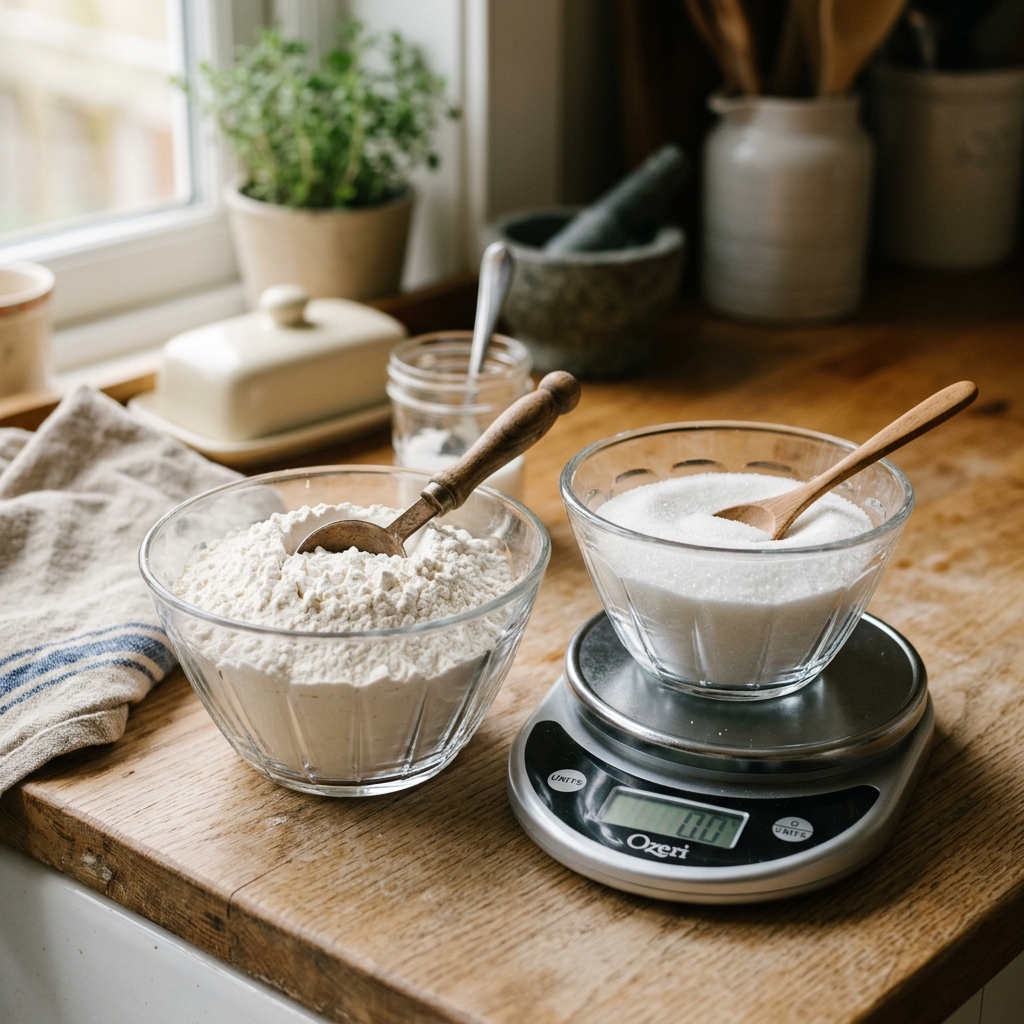
The Real Difference: It's All About Protein
At the end of the day, the biggest difference between these two flours is protein. The amount of protein determines how much gluten you get when you mix the flour with water.
- All-Purpose Flour: This is your kitchen workhorse. With a moderate protein content (usually 10% to 12%), it's designed to be a jack-of-all-trades. It's tender enough for cookies and pie crusts, but strong enough to make a decent loaf of quick bread.
- Bread Flour: This is milled from hard wheat and has a much higher protein content (typically 12% to 14%). It's designed to build a tough, elastic gluten network that traps expanding gas bubbles, giving yeast breads their signature rise and chew.
More protein means a stronger gluten structure, which gives your bread that perfect chewy bite.
How They Compare Side-by-Side
Since they come from different kinds of wheat, they don't weigh the same or absorb liquids at the same rate. Here is how they stack up:
| Property | All-Purpose Flour | Bread Flour |
|---|---|---|
| Protein Content | 10% - 11.7% | 12.7% - 14.2% |
| Average Cup Weight | 120g | 130g |
| Water Absorption Rate | Lower (approx. 60%) | Higher (approx. 65% - 68%) |
| Best Suited For | Cookies, Quick Breads, Muffins | Yeast Breads, Sourdough, Bagels, Pizza Dough |
The Thirsty Flour Rule: Water Absorption
Think of high-protein flour as a thirsty sponge. It needs more water to form a workable dough.
If you try to swap all-purpose flour into a sourdough recipe that calls for bread flour, you'll probably end up with a sticky, wet mess. Because AP flour can't absorb as much water, that extra liquid will just sit there. To fix it, you'll need to add a tablespoon or two of extra flour, or cut back on the water next time.
Baker's Note
Try Our Converter
Don't guess when switching flours.
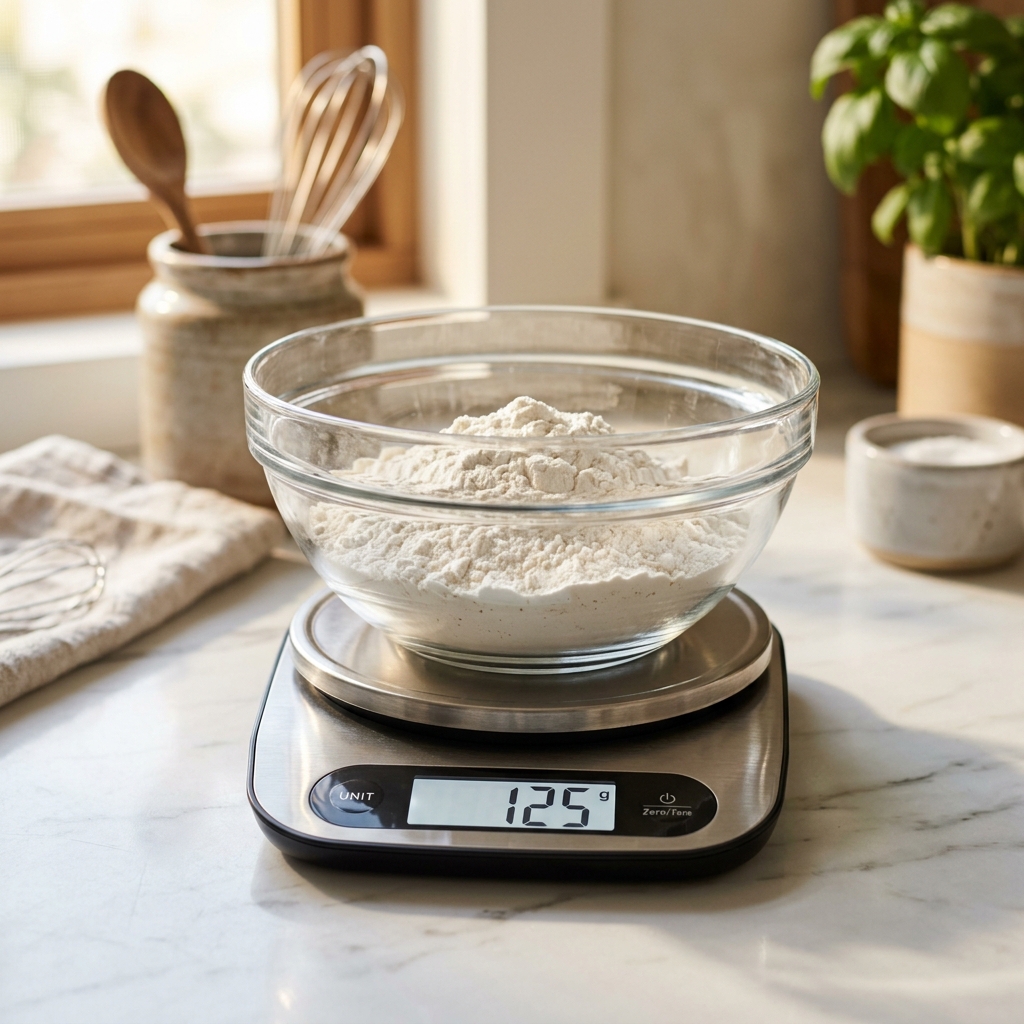
Our free Cups to Grams Converter makes swapping simple. Because bread flour is denser than all-purpose, using a scale is the best way to keep your hydration ratios correct and guarantee a great rise.
More Baking Tools
Keep your kitchen measurements accurate with these free calculators:
- Cups to Grams Converter — Swap volume cups to weight measurements.
- Grams to Cups Converter — Convert weights back to cups.
- Recipe Scaler — Easily scale your recipes up or down.
- Unit Converter — Quickly switch between metric and imperial.
Wrapping Up
At the end of the day, choose your flour based on the texture you want. Reach for all-purpose when you want something tender and crumbly (like a pie crust or cookie), and grab bread flour when you want structure and chew (like sourdough or pizza dough). Whichever you choose, use a kitchen scale to measure by weight—it's the absolute best way to ensure baking success. Happy baking!
Frequently Asked Questions
Recommended Reading
How to Measure Flour Correctly: Spoon & Level vs. Scoop & Sweep
The way you scoop flour can alter your baking by 30%. Learn why the spoon-and-level method is your best bet when you don't have a scale.
Butter Measurements Explained: Sticks, Cups, Grams and Tablespoons
How much is a stick of butter? We break down the math for sticks, cups, grams, tablespoons, and ounces, plus look at European vs. American butter.
Almond Flour vs. All-Purpose Flour: Can You Substitute Them 1:1?
Thinking of swapping all-purpose flour for almond flour? It's not a simple 1:1 trade. Here's how to adjust your recipe with the right ratio, extra eggs, and temp settings for baking success.