Butter Measurement Conversion Guide: Sticks, Cups, Grams, and Ounces
If you've ever tried to make an American recipe from outside the US, you've probably stared at the ingredient list wondering what on earth a "stick of butter" is. Elsewhere in the world, butter is sold in 250g or 500g blocks, which makes stick measurements incredibly confusing.
And let's be honest: even if you do live in the US, shoving solid butter into a measuring cup is messy, annoying, and usually inaccurate. Here is a simple guide to butter conversions so you never have to guess again.
Quick Butter Reference
- ›1 Stick: 1/2 cup = 8 tablespoons = 113 grams = 4 ounces
- ›1/2 Stick: 1/4 cup = 4 tablespoons = 57 grams = 2 ounces
- ›2 Sticks: 1 cup = 16 tablespoons = 227 grams = 8 ounces
- ›European Block (250g): About 2.2 US sticks (or 1 cup plus 1.6 tablespoons).
Want to Skip the Butter Mess?
Don't waste time smashing cold butter into a measuring cup. Use our free Butter Converter to swap between sticks, tablespoons, cups, and grams instantly.
The Basic Butter Math
Here is the breakdown of what a single US stick of butter actually translates to:
- 1 US Stick of Butter = 1/2 cup = 8 tablespoons = 113 grams = 4 ounces
- 2 US Sticks of Butter = 1 cup = 16 tablespoons = 227 grams = 8 ounces
- 4 US Sticks (1 pound box) = 2 cups = 32 tablespoons = 454 grams = 16 ounces
If you memorize one thing, let it be this: 1 stick of butter is 1/2 cup, 8 tablespoons, or 113 grams. That will save you in 90% of baking recipes.
The Ultimate Butter Conversion Chart
Here is a handy table to help you convert butter in a flash:
| Sticks | Cups | Tablespoons | Grams | Ounces |
|---|---|---|---|---|
| 1/4 stick | 1/8 cup | 2 tbsp | 28g | 1 oz |
| 1/2 stick | 1/4 cup | 4 tbsp | 57g | 2 oz |
| 1 stick | 1/2 cup | 8 tbsp | 113g | 4 oz |
| 1.5 sticks | 3/4 cup | 12 tbsp | 170g | 6 oz |
| 2 sticks | 1 cup | 16 tbsp | 227g | 8 oz |
| 3 sticks | 1.5 cups | 24 tbsp | 340g | 12 oz |
| 4 sticks | 2 cups | 32 tbsp | 454g | 16 oz |
The European Block Trap
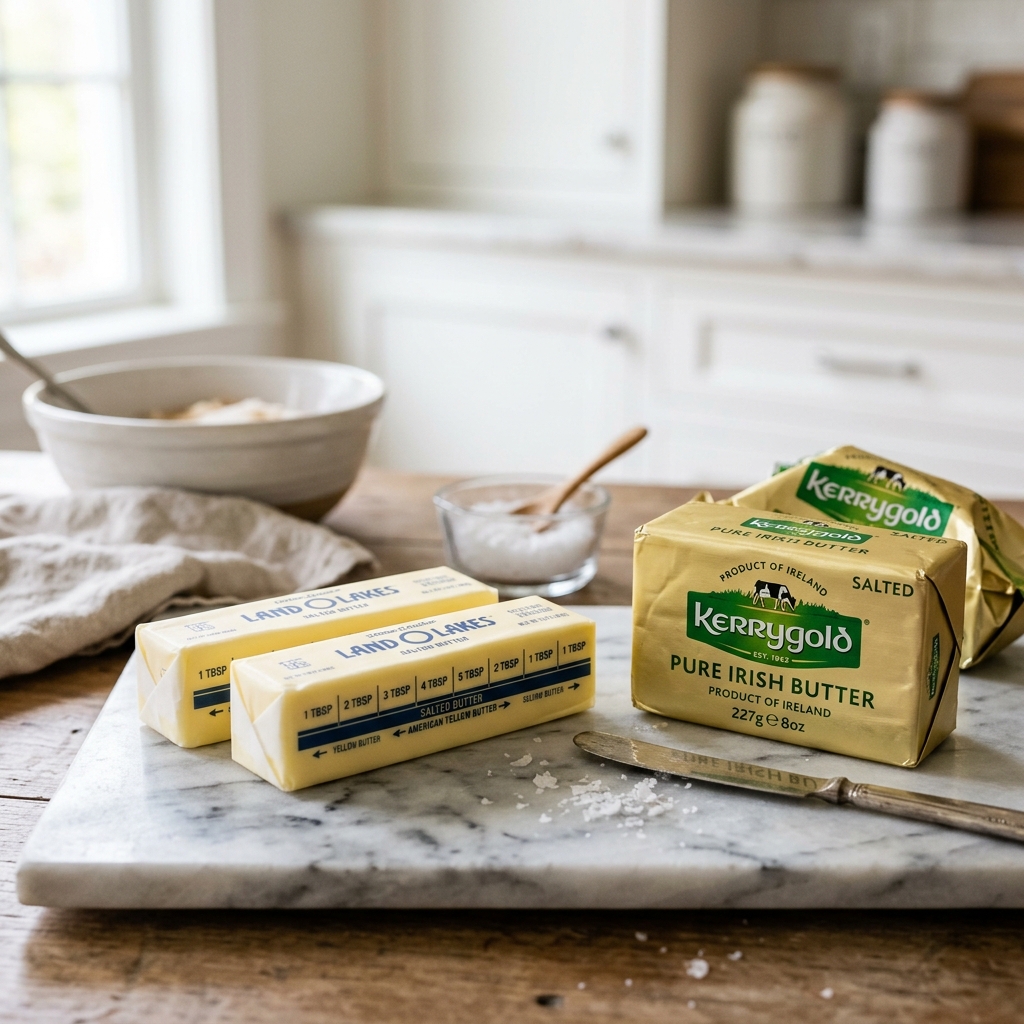
If you're baking in the UK, Europe, or Australia, you're probably buying butter in 250-gram blocks. A very common mistake is assuming that a block is the same as two US sticks.
Here is the problem: 2 US sticks actually weigh 227 grams. That means a 250g European block has an extra 23 grams of butter (about 1.5 tablespoons). Throwing the whole block into a recipe that calls for two sticks can make your cookies spread flat and turn your cakes greasy. Trust me, you'll want to cut off that extra sliver and weigh out exactly 227g.
Inside the Kitchen
Try Our Butter Converter
Tired of dealing with messy measuring cups?
Our free Butter Converter Tool makes life easy. Just choose your unit (sticks, grams, cups, whatever), plug in the number, and it will instantly give you the conversions.
More Handy Kitchen Tools
Keep your kitchen measurements accurate with these free calculators:
- Butter Converter — Convert butter measurements between cups, grams, and sticks.
- Unit Converter — Quickly switch between metric and imperial.
- Cups to Grams Converter — Swap volume cups to weight measurements.
- Recipe Scaler — Easily scale your recipes up or down.
Wrapping Up
Whether you're dealing with US sticks or a European block, keeping these numbers handy will save you a lot of kitchen frustration. When in doubt, just pull out your scale and weigh it in grams—it's the only way to guarantee your baked goods turn out exactly how they should. Happy baking!
Frequently Asked Questions
Recommended Reading
How to Measure Flour Correctly: Spoon & Level vs. Scoop & Sweep
The way you scoop flour can alter your baking by 30%. Learn why the spoon-and-level method is your best bet when you don't have a scale.
Butter Measurements Explained: Sticks, Cups, Grams and Tablespoons
How much is a stick of butter? We break down the math for sticks, cups, grams, tablespoons, and ounces, plus look at European vs. American butter.
Almond Flour vs. All-Purpose Flour: Can You Substitute Them 1:1?
Thinking of swapping all-purpose flour for almond flour? It's not a simple 1:1 trade. Here's how to adjust your recipe with the right ratio, extra eggs, and temp settings for baking success.