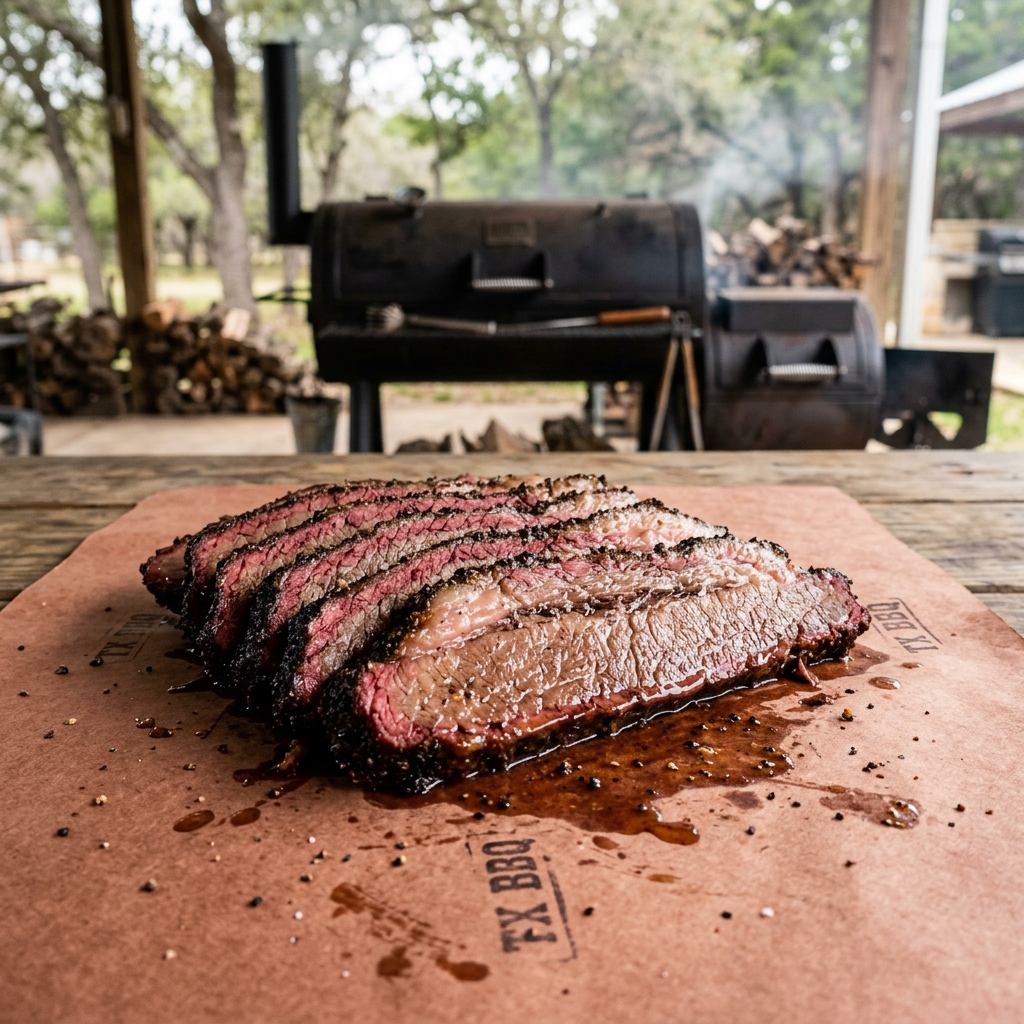
Texas-Style Smoked Brisket
Learn how to smoke a traditional Texas-style brisket. Master the classic salt and pepper rub ratio, heat management, and temperature checks to get a perfect dark bark and tender, juicy slices.
Ingredients
A whole packer brisket, which includes both the flat and point muscles.
Coarse salt is best because it dissolves slowly and won't over-salt the meat.
Coarse black pepper is key to building that crunchy dark bark on the outside.
Adds a nice savory flavor under the salt and pepper.
Used to spray the brisket during the smoke to keep it moist.
Mixed half-and-half with the vinegar.
Step-by-Step Instructions
Trim the Brisket
Make sure the brisket is cold before trimming. Slice off the hard, waxy fat pocket entirely. On the top side, trim the fat cap down to a uniform 1/4-inch thickness. Round off any sharp corners to give the brisket a clean, aerodynamic shape.
Trimming off the hard fat and rounding any sharp edges helps the smoke glide smoothly over the meat, ensuring it cooks evenly without burning the thin tips.
Season and Dry-Brine
Mix the salt, coarse pepper, and garlic powder together. Season the brisket generously on all sides, covering it completely. Place it on a wire rack over a baking sheet and refrigerate uncovered for 12 to 24 hours.
Salt needs time to penetrate deep into the meat. Letting it sit overnight in the fridge keeps the brisket incredibly juicy during the long cook.
Get a Clean Wood Fire Going
Preheat your smoker to 225°F–250°F (107°C–121°C). Use dry, seasoned oak or hickory wood. Avoid thick, billowy white smoke; you want a faint, almost invisible blue smoke rising from the stack.
Look for thin, blue smoke. Thick white smoke tastes bitter and leaves a bad soot aftertaste on the meat.
Smoke and Spritz
Place the brisket in the smoker with the fat cap facing the heat source. Let it smoke undisturbed for the first 3 hours. After that, spray the dry edges of the meat with your half-and-half water and vinegar mix every hour.
Spritzing cools down the thinner parts of the meat so they don't dry out. The surface moisture also helps the smoke stick to the meat, creating that classic pink smoke ring.
Wrap the Brisket During the Stall
Watch the internal temperature. Around 160°F (71°C), the temperature will stop rising for a few hours. This is called the stall. Once the bark is dark and set (firm to the touch), wrap the brisket tightly in peach butcher paper.
When the meat stops rising in temp (the stall), wrapping it in butcher paper traps the heat and pushes it through without ruining the crispy bark.
Finish, Rest, and Slice
Put the wrapped brisket back in the smoker. Cook until the internal temperature reaches 203°F (95°C) in the thickest part. The thermometer probe should slide in easily with no resistance. Place the wrapped brisket in a dry cooler wrapped in towels for 2 to 4 hours, then slice against the grain.
Resting the brisket in a warm cooler is just as important as cooking it. It lets the juices settle back into the meat so it doesn't dry out when sliced.
Nutritional Profile
Macros listed below scale dynamically based on the serving size selected in the recipe card.
Kitchen Timer
Need to scale or convert sizes?
This recipe links with our specialized calculators. Use them to calibrate oven dials, adjust brine salinity percentages, or scale baking pans.
Try the Meat Temperature CalculatorTechnique Notes
- Always slice your brisket against the grain. Slicing with the grain leaves the long meat fibers intact, making it tough and stringy to chew.
- Use peach butcher paper instead of foil. Foil traps too much steam, which softens the bark and turns it mushy. Paper breathes, keeping the bark nice and crusty.
- Patience is key—don't rush the rest. A rested brisket holds onto its juices much better.