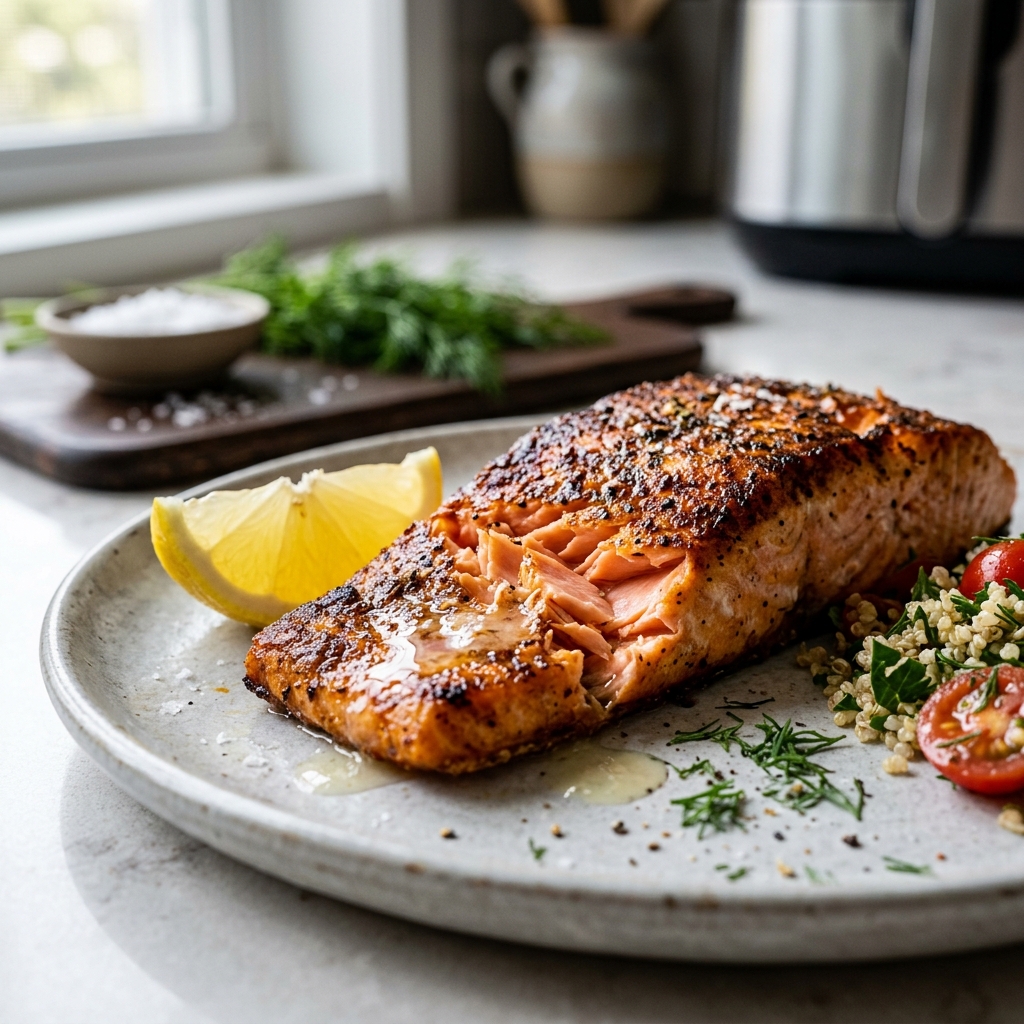
Perfect Air Fryer Salmon
The easiest way to cook salmon. Learn how to get restaurant-style crispy skin and tender, juicy fish using simple temp controls and quick air frying.
Ingredients
Leave the skin on! It protects the delicate fish from drying out in the air fryer.
Helps the spice rub stick and promotes nice browning.
Adds a smoky flavor and a beautiful deep red crust.
Adds a savory, rich touch.
Basic seasoning.
Freshly ground adds the best flavor.
A squeeze of fresh lemon right before eating cuts through the rich fish.
Step-by-Step Instructions
Dry the Skin Thoroughly
Pat the salmon fillets completely dry on all sides using paper towels. Focus especially on the skin side. Let the fillets sit skin-side up on a plate for 5 minutes to finish air-drying.
Moisture is the enemy of crispy skin. Any water left on the salmon will create steam in the air fryer, leaving the skin soft and soggy instead of crispy.
Season the Flesh Side
Rub the olive oil onto the flesh side of the salmon. In a small bowl, mix the paprika, garlic powder, salt, and pepper. Sprinkle this rub evenly over the flesh, rubbing it in gently. Leave the skin side completely bare.
The skin has plenty of natural fat to crisp up on its own. Keeping spices on the flesh side prevents them from burning under the hot air fryer elements.
Preheat Your Air Fryer
Set your air fryer to 400°F (204°C) and let it run empty for 5 minutes. Getting the basket hot first is key to getting a good sear.
Putting fish into a cold air fryer heats it up slowly, which dries out the center of the salmon before the outside has a chance to crisp.
Cook Skin-Side Up First
Place the salmon fillets skin-side UP in the preheated basket. Air fry at 400°F (204°C) for 4 minutes.
Since air fryers heat from the top down, starting skin-side up subjects the skin to intense direct heat. This renders the fat layer right underneath, crisping the skin like a chip.
Flip and Finish Cooking
Carefully flip the fillets over so they are skin-side down. Cook at 400°F (204°C) for another 3 to 4 minutes depending on how thick the fillets are, until the spices are toasted.
Flipping allows the heat to finish cooking the bottom side while creating a beautiful, caramelized spice crust on the top without burning it.
Check the Temp and Rest
Insert an instant-read thermometer into the thickest part of the salmon. Pull it out when the temp reads 125°F (52°C) for medium-rare, or 135°F (57°C) for medium. Let the fish rest on a plate for 2 minutes before serving.
The salmon will continue cooking as it rests, rising another 5°F. Pulling it at 125°F ensures the center stays moist and flaky. Cooking it too long squeezes out the juices, leaving it dry.
Nutritional Profile
Macros listed below scale dynamically based on the serving size selected in the recipe card.
Kitchen Timer
Need to scale or convert sizes?
This recipe links with our specialized calculators. Use them to calibrate oven dials, adjust brine salinity percentages, or scale baking pans.
Try the Meat Temperature CalculatorTechnique Notes
- Keep an eye out for white spots: Overcooked salmon releases a white protein called albumin. If you see white clumps forming on the fish, pull it immediately—it's getting dry.
- Don't crowd the basket. Air fryers need hot air circulating to crisp up the edges. Leave at least an inch of space between the fillets.
- Use our cooking time converter if you are cooking larger batches or thicker cuts.