US vs. UK vs. Australian Measuring Cups
Whether you're looking at a recipe from New York, London, or Sydney, you'll see the word "cup" everywhere. The catch? A cup is not a cup.
Depending on where the recipe was written, that cup could hold anywhere from 236.6 mL to 284.1 mL. That is a massive **20% difference**, which is more than enough to turn a light, fluffy cake into a dense brick. Here is how to navigate the regional cup maze without ruining your baking.
The Cup Cheat Sheet
- ›US Customary Cup: 236.59 mL (8 US fluid ounces). Used in standard US home recipes.
- ›US Legal Cup: 240 mL (8.12 US fluid ounces). Used on FDA nutrition facts food labeling.
- ›Metric Cup (UK, Australia, Canada): 250 mL (8.45 US fluid ounces). Standard in Commonwealth countries.
- ›UK Imperial Cup (Vintage): 284.13 mL (10 Imperial fluid ounces). Used in old British cookbooks.
Convert Regional Cups Instantly
Don't guess the volumes. Use our free mL and Cups Converter to swap liquid measurements between US, Metric, and Imperial cups in a snap.
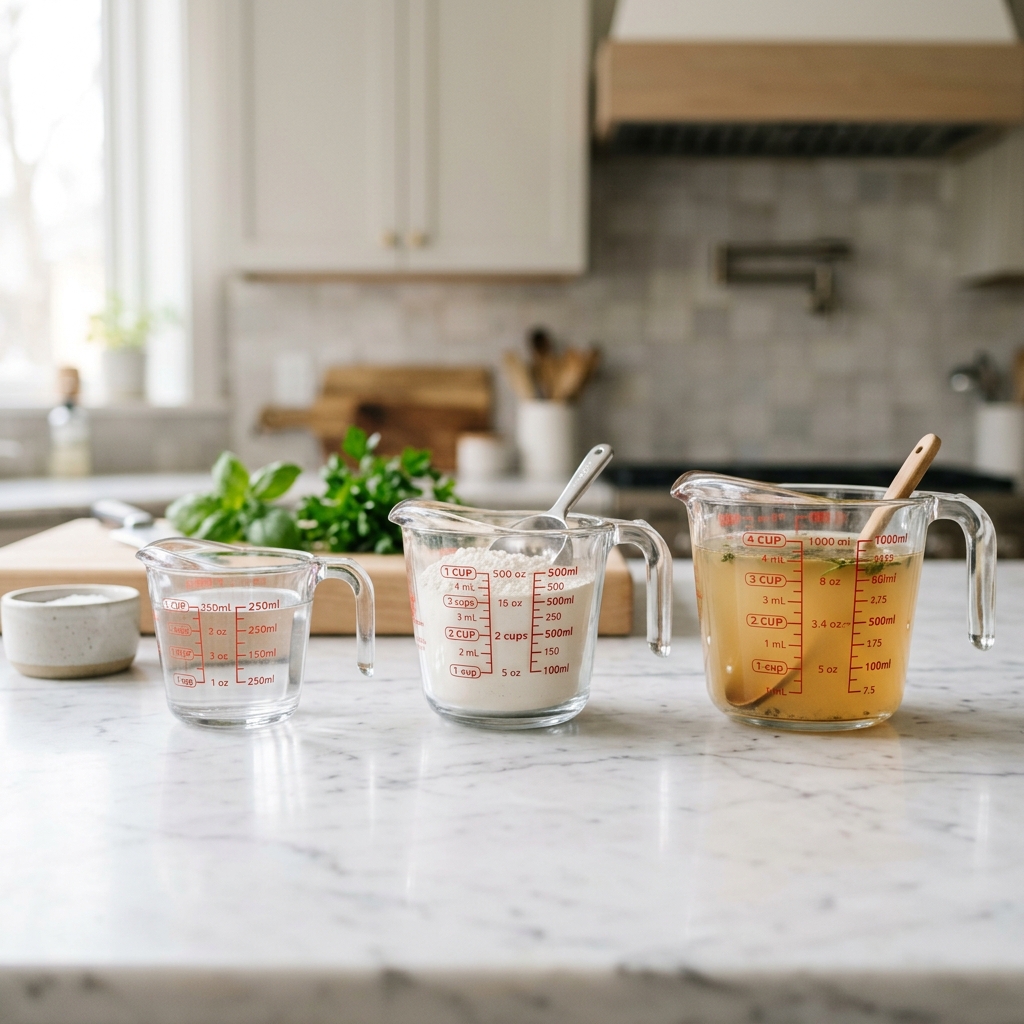
Regional Cup Comparison
Here is how the world's most common cup sizes stack up in milliliters, fluid ounces, and tablespoons:
| Cup Type | Volume (mL) | US Fluid Ounces | Spoon Equivalents (US) |
|---|---|---|---|
| UK Imperial Cup (Vintage) | 284.13 ml | 9.61 fl oz | 19.2 tbsp |
| Metric / Commonwealth Cup | 250.00 ml | 8.45 fl oz | 16.9 tbsp |
| US Legal Cup (FDA) | 240.00 ml | 8.12 fl oz | 16.2 tbsp |
| US Customary Cup | 236.59 ml | 8.00 fl oz | 16.0 tbsp |
| Japanese Cup | 200.00 ml | 6.76 fl oz | 13.5 tbsp |
If you use a 250 mL metric cup for a US recipe that calls for 3 cups of flour, you'll end up adding 40 grams of extra flour. That's a sure way to dry out your dough.
How to Deal with Different Cup Sizes
If you are working with an international recipe, here is how to handle the cup differences:
- US recipe with Metric cups: Since a metric cup (250 mL) is **5.7% larger** than a US cup (236.6 mL), scoop your ingredients slightly "scant"—meaning you leave a tiny gap at the top of the cup.
- Metric recipe with US cups: Since US cups are smaller, you'll need to add **1 tablespoon + 1 teaspoon** of the ingredient for every cup in the recipe to reach that 250 mL mark.
- The Real Solution: Use a kitchen scale. Weighing ingredients in grams makes regional cup confusion disappear. 125 grams of flour is exactly the same in London, Sydney, or New York.
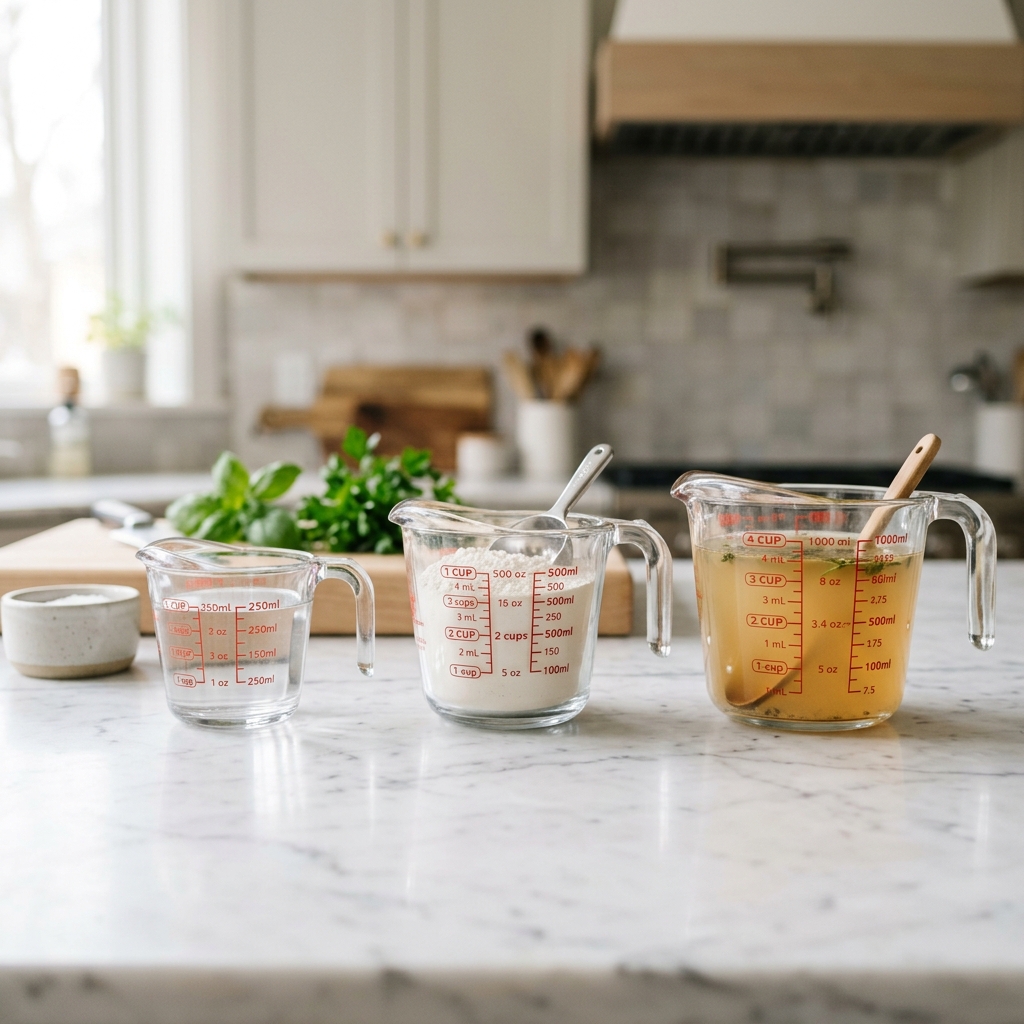
Baker's Note
Try Our Converter
Stop guessing. Use our free mL and Cups Converter to switch liquid volumes between US, metric, and Japanese cups instantly.
More Cooking Tools
Keep your kitchen measurements accurate with these free converters:
- mL and Cups Converter — Swap liquid volumes across different regions.
- Unit Converter — Swap between metric and imperial kitchen measurements.
- Cups to Grams Converter — Swap cups to weight measurements for perfect baking.
- Recipe Scaler — Scale recipe servings up or down.
The Bottom Line
Cups are handy, but they're just not reliable when you're crossing borders. If you are baking something delicate from an international site, save yourself the headache and convert those cups to grams or milliliters.
Frequently Asked Questions
Recommended Reading
US Cups vs. Australian Cups: Why Your Recipe Might Be Failing
A US cup is 236.6 ml, but an Australian cup is 250 ml. Here is how that 6% difference can ruin your baking, and how to swap them easily.
How Many Grams Are in a Cup? (It's Not as Simple as You Think)
Looking for a quick way to convert cups to grams? Here is a simple, ingredient-by-ingredient guide to what one cup actually weighs in the real world.
How to Convert Any Recipe from Cups to Grams
Tired of guessing how much a cup of flour actually weighs? Here is how to convert any cup-based recipe to grams so your bakes turn out perfect every single time.