Dry vs. Liquid Measuring Cups: Yes, There is a Difference
A cup of water and a cup of flour take up the exact same amount of space. So, does it really matter which measuring cup you grab from the drawer?
Honestly, yes. While they hold the same volume, their designs are completely different. Using the wrong cup makes it almost impossible to measure accurately. Here is why you should keep them separate.
At a Glance: Wet vs. Dry Cups
- ›Dry Cups: Designed to be filled to the top and swept level with a flat edge (like the back of a knife). Use these for flour, sugar, oats, and fats like butter or shortening.
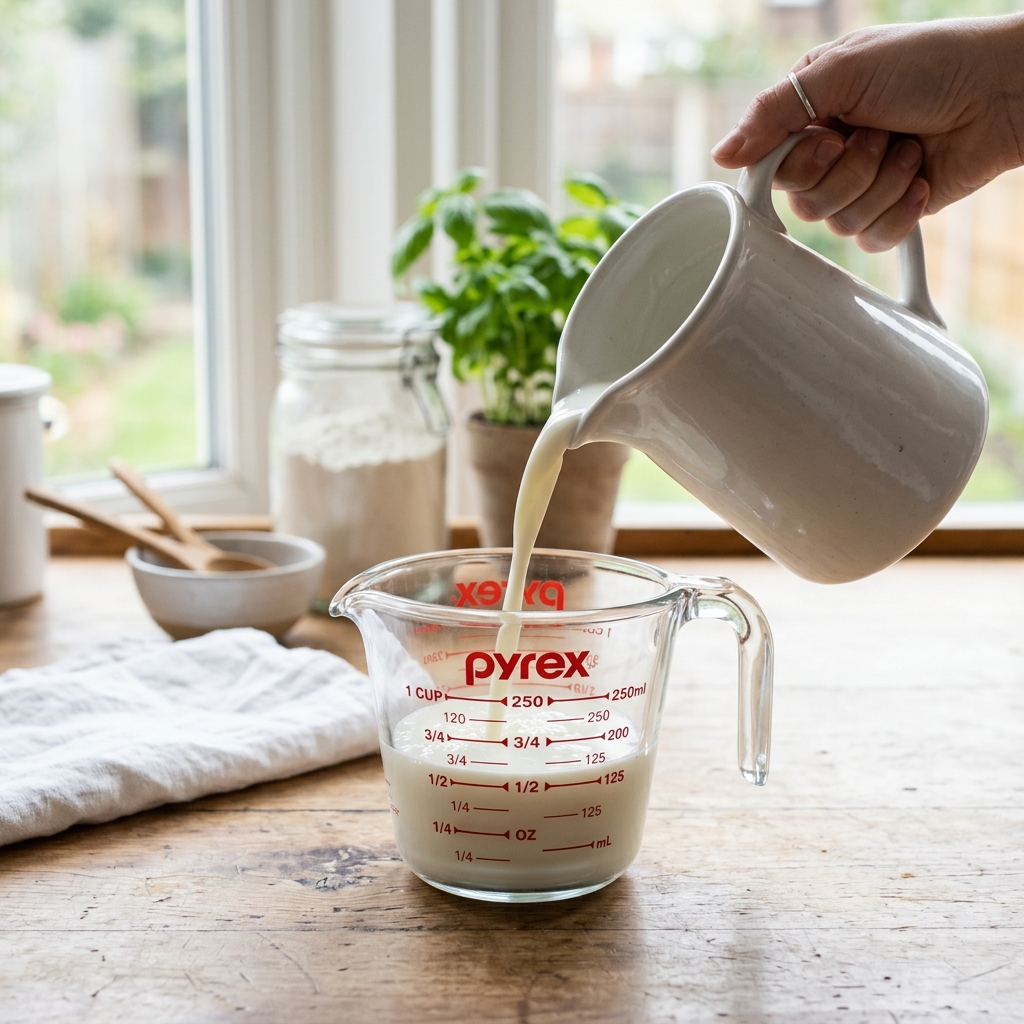
- ›Liquid Cups: Usually clear jugs with a handle, a pouring spout, and lines marked below the rim. Use these for water, milk, oil, and stocks.
- ›Same space, different shape: Both hold exactly 236.59 mL (in the US), but their shapes dictate how you measure them.
Skip the Cup Debate Entirely
Don't want to worry about having the right cups clean? Swap your recipe to weight and measure everything in one bowl using our free Cups to Grams Converter.
Why They Look Different
The design differences are all about making your kitchen life easier and keeping measurements accurate:
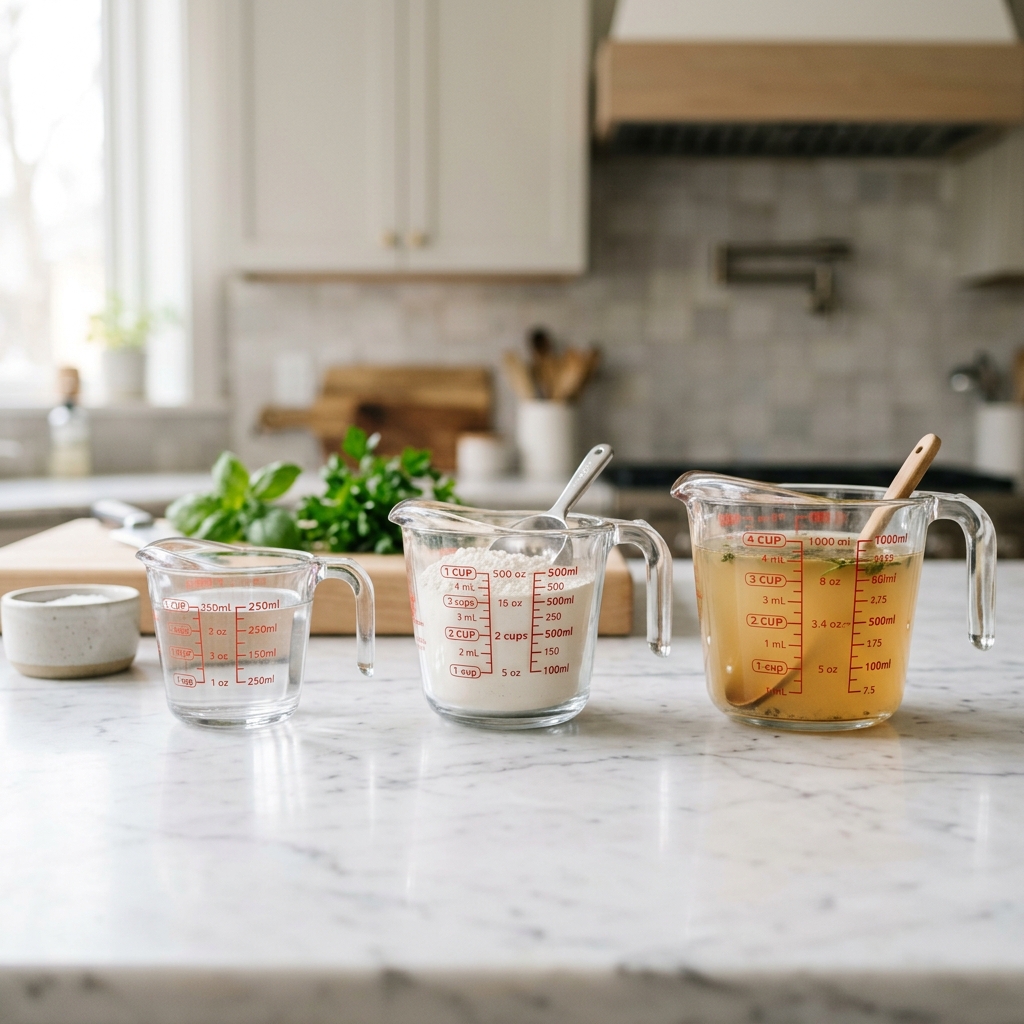
- Dry Measuring Cups: These are the nested cups (like 1/4, 1/2, and 1 cup) with flat rims. They're designed so you can pile flour or sugar over the top, then slide a flat edge (like a butter knife) across the rim to scrape off the excess. It gives you a clean, level cup.
- Liquid Measuring Cups: These are clear glass or plastic pitchers with lines on the side. They have a spout for easy pouring and extra space at the top (headspace) so you can fill it to the line and carry it to your bowl without sloshing liquid over the sides.
Never shake your flour to level it in a liquid cup. It packs the flour down, making your dough dry and dense.
Why Mixing Them Up Ruins Your Baking
If you try to measure flour in a liquid cup, you have to peer through the glass to guess where the 1-cup line is. Since you can't sweep the top flat, you'll end up with an uneven heap.
To flatten it out, you'll probably shake or tap the cup on the counter. Don't do it! Shaking forces all the air out of the flour and packs it down. A compacted cup of flour can easily weigh 150 grams or more, compared to a standard 120-gram cup. That extra flour will make your cakes dry and turn your chewy cookies into hockey pucks.
The Right Way to Measure With Cups
If you're stuck using cups, here is how to get the best results:
- For Dry Ingredients: Fluff up your flour first, spoon it gently into your dry cup until it overflows, and scrape the excess off flat with the back of a knife.
- For Liquid Ingredients: Place your liquid cup on a flat counter, crouch down so your eyes are level with the measurement line, and pour until the bottom of the liquid's curve (the meniscus) hits the line perfectly.
Kitchen Science
Ditch the Cups Entirely
Want to make your life simpler?
Our free Cups to Grams Converter lets you skip the cups debate altogether. Swap your volume recipes to weights, weigh everything on a scale, and enjoy perfect results every single time.
More Useful Kitchen Tools
Check out these other free conversion tools to keep your cooking easy:
- Cups to Grams Converter — Swap volume cups for precise grams.
- Grams to Cups Converter — Turn grams back into cups when you need to.
- mL and Cups Converter — Convert milliliters and liquid cups.
- Unit Converter — Flip between metric and imperial measurements.
Wrap Up
Dry and liquid measuring cups are not interchangeable. Keeping dry ingredients in dry cups and wet ingredients in liquid cups is one of those simple kitchen rules that saves you from baking disasters. Keep them straight, and your kitchen adventures will go a lot smoother!
Frequently Asked Questions
Recommended Reading
US Cups vs. Australian Cups: Why Your Recipe Might Be Failing
A US cup is 236.6 ml, but an Australian cup is 250 ml. Here is how that 6% difference can ruin your baking, and how to swap them easily.
How Many Grams Are in a Cup? (It's Not as Simple as You Think)
Looking for a quick way to convert cups to grams? Here is a simple, ingredient-by-ingredient guide to what one cup actually weighs in the real world.
How to Convert Any Recipe from Cups to Grams
Tired of guessing how much a cup of flour actually weighs? Here is how to convert any cup-based recipe to grams so your bakes turn out perfect every single time.