Baking Conversion Chart for Common Ingredients
If you've ever read Shirley Corriher's cooking books, you've probably heard her famous quote: "Baking is chemistry." In baking, the exact ratio of your ingredients determines whether your cake rises beautifully or collapses into a puddle.
The problem with measuring cups is that they are highly inaccurate. How tightly you pack the flour, how you scoop it, and even the humidity in your kitchen can change how much flour actually fits in the cup. This master conversion chart is your bridge, translating volume cups into exact gram weights so you can bake with confidence.
At a Glance: Common Baking Weights
- ›Flour: Averages **120g to 125g** per cup, though bread flour is slightly heavier (~130g).
- ›Sugars: Granulated sugar is **200g** per cup. Packed brown sugar is **213g**, and powdered sugar is **113g**.
- ›Fats: Solid butter is **227g** per cup (one stick is 113g). Vegetable oil is about **218g**.
- ›Liquids: Water, milk, and eggs sit around **236g to 244g** per cup.
Want to Skip the Math?
No need to guess. Use our free Cups to Grams Converter to quickly swap volume cups to exact weights for over 100 common ingredients.
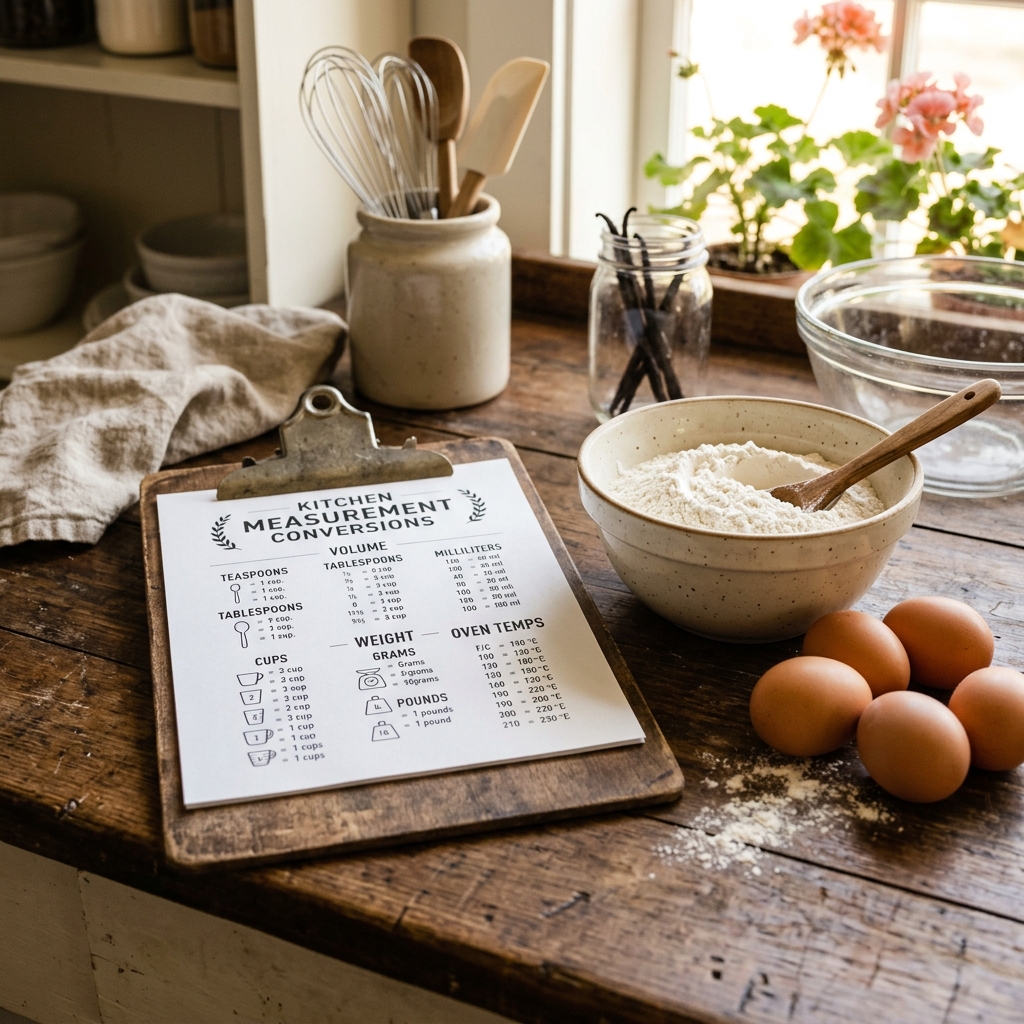
The Master Baking Conversion Chart
Here are the cup, tablespoon, and teaspoon weights for the most common baking ingredients:
| Baking Ingredient | 1 Cup (Grams) | 1 Tbsp (Grams) | 1 Tsp (Grams) |
|---|---|---|---|
| All-Purpose Flour | 125g | 7.8g | 2.6g |
| Bread Flour | 130g | 8.1g | 2.7g |
| Whole Wheat Flour | 130g | 8.1g | 2.7g |
| Almond Flour | 84g | 5.3g | 1.8g |
| Granulated White Sugar | 200g | 12.5g | 4.2g |
| Packed Brown Sugar | 213g | 13.3g | 4.4g |
| Powdered (Icing) Sugar | 113g | 7.0g | 2.3g |
| Dutch-Process Cocoa | 85g | 5.3g | 1.8g |
| Unsalted Butter | 227g | 14.2g | 4.7g |
| Vegetable Oil | 218g | 13.6g | 4.5g |
| Whole Milk | 244g | 15.3g | 5.1g |
| Baking Powder | N/A | 14.0g | 4.6g |
| Baking Soda | N/A | 18.0g | 6.0g |
| Fine Sea Salt | N/A | 18.0g | 6.0g |
Using a weight chart removes all the guesswork, ensuring that your cup of flour matches the exact amount the recipe developer used.
How to Use These Weights in Your Kitchen
Here is how to make these numbers work for you when you're baking:
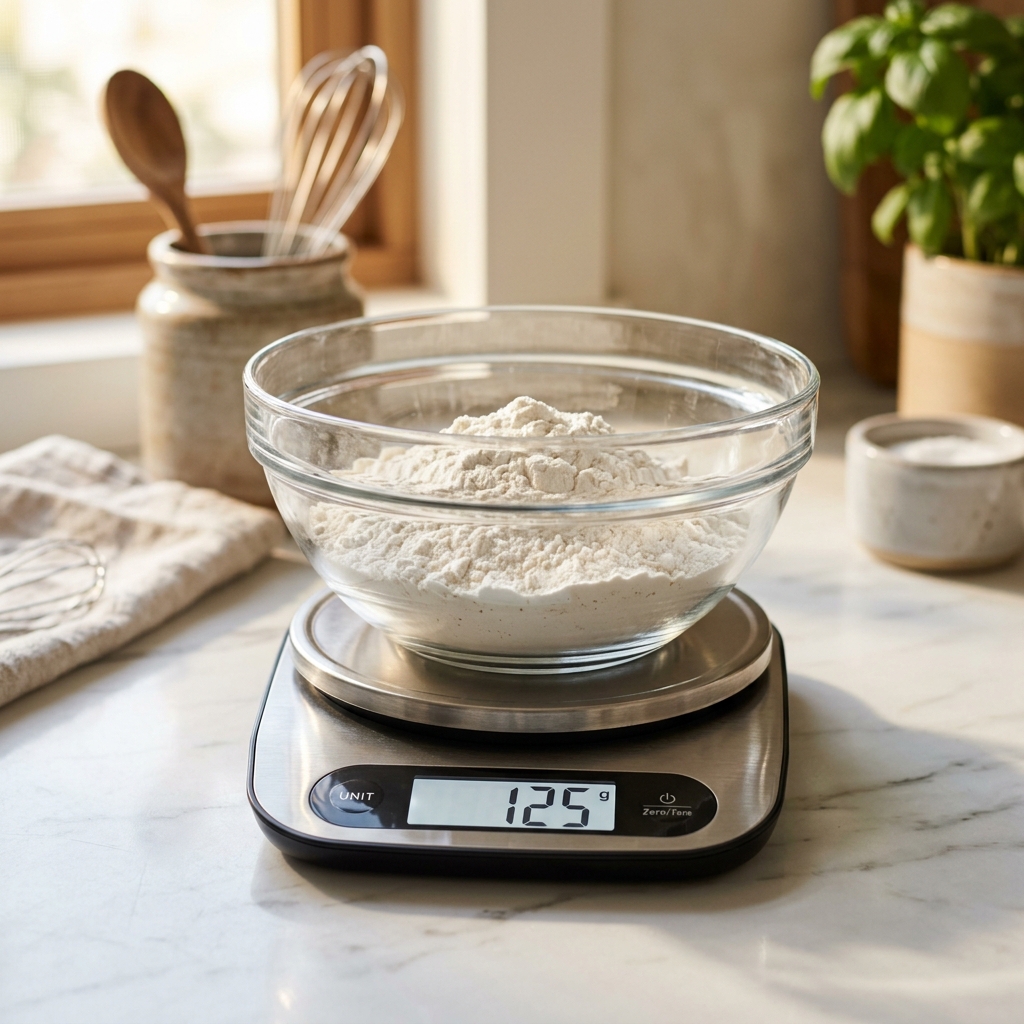
- Doing the multiplication: If a recipe asks for 2.5 cups of flour, just multiply the cup weight from the chart: 2.5 × 125g = **312.5 grams**.
- Keep using spoons for small amounts: For things under 1 tablespoon, like baking soda or salt, standard home scales aren't quite sensitive enough. It's much easier and safer to use your measuring spoons for these tiny amounts.
- Stick to the weight for dry ingredients: Ingredients like oats or whole wheat flour drink up liquid very quickly. Weighing them keeps your ratios perfectly balanced so your dough doesn't dry out.
Kitchen Reference
Try Our Converter
Tired of doing the math yourself?
Our free Cups to Grams Converter handles the conversions for you. Just select your ingredient and amount, and it will give you the exact weight in seconds.
More Handy Kitchen Tools
Keep your kitchen measurements accurate with these free tools:
- Cups to Grams Converter — Swap volume cups to weight measurements.
- Tablespoons Converter — Convert teaspoons and tablespoons to grams.
- Unit Converter — Quickly switch between metric and imperial.
- Grams to Cups Converter — Convert weights back to cups.
Wrapping Up
Keeping a reliable ingredient weight chart in your kitchen is one of the easiest ways to level up your baking. Once you start converting those volume cups into exact gram weights and using a scale, you'll see a massive difference in how consistent—and delicious—your baked goods turn out. Happy baking!
Frequently Asked Questions
Recommended Reading
US Cups vs. Australian Cups: Why Your Recipe Might Be Failing
A US cup is 236.6 ml, but an Australian cup is 250 ml. Here is how that 6% difference can ruin your baking, and how to swap them easily.
How Many Grams Are in a Cup? (It's Not as Simple as You Think)
Looking for a quick way to convert cups to grams? Here is a simple, ingredient-by-ingredient guide to what one cup actually weighs in the real world.
How to Convert Any Recipe from Cups to Grams
Tired of guessing how much a cup of flour actually weighs? Here is how to convert any cup-based recipe to grams so your bakes turn out perfect every single time.